If you feel a deep, hard-to-pinpoint ache along your shoulder blade, upper back, or neck that just will not let up, the dorsal scapular nerve may be involved. Many people come to our Seattle chiropractic clinics thinking they have a “rhomboid strain” or a knot they cannot stretch out, when the real issue is dorsal scapular nerve entrapment. Understanding what is going on inside your shoulder blade area can be the first step toward getting lasting relief.
What is dorsal scapular nerve entrapment?
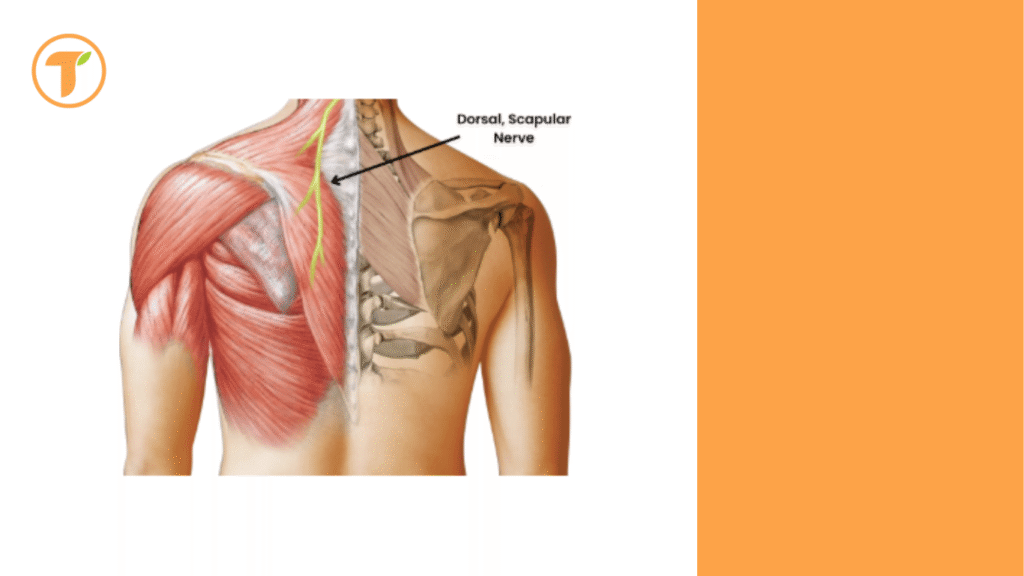
The dorsal scapular nerve runs from your neck (cervical spine) and travels between the muscles around your shoulder blade, including the rhomboids and levator scapulae. It helps control these muscles and contributes to how your shoulder blade moves and stabilizes during daily activities, workouts, and sports.
Dorsal scapular nerve entrapment happens when this small nerve becomes irritated, compressed, or “pinched” along its path. This can create very specific dorsal scapular nerve pain—often felt as a burning, sharp, or nagging ache along the inside border of the shoulder blade, between the spine and the scapula, or up into the neck.
Common dorsal scapular nerve entrapment symptoms
Because this nerve sits deep under layers of muscle, the pain can be confusing. People often describe symptoms like:
- Deep, aching periscapular pain along the inner border of the shoulder blade
- Scapula nerve pain that may feel sharp, stabbing, or burning with certain movements
- Pain that worsens with overhead activity, pulling, rowing, or long periods of sitting
- Upper back nerve pain that feels different from simple muscle soreness
- A sense of weakness, fatigue, or “shakiness” in the shoulder, especially when lifting the arm
- Posture-related discomfort near the rhomboid muscle and levator scapulae
In some cases, scapular nerve pain may be mistaken for general shoulder pain or even neck issues. Careful assessment is important so we can address the true source of the problem rather than only chasing tight muscles.
What causes scapular nerve pain and entrapment?
Dorsal scapular nerve entrapment can develop gradually or after a specific event. Common contributors include:
- Posture and desk work: Long hours at a computer, driving, or looking down at devices can overload the cervical spine, thoracic spine, and the muscles that anchor the shoulder blade.
- Repetitive movements: Rowing, weightlifting, swimming, racquet sports, and certain job tasks can irritate the nerve where it passes between the muscles.
- Muscle imbalance: Weak scapular stabilizers and tight chest or neck muscles can alter shoulder blade mechanics, increasing strain around the nerve.
- Previous injury: Whiplash, falls, or sports injuries can change how the neck and upper back move, sometimes setting the stage for dorsal nerve entrapment.
Because the dorsal scapular nerve innervation plays a key role in controlling scapular stability, even mild irritation may lead to a cycle of pain, altered movement, and more irritation if it is not addressed.
How we assess dorsal scapular nerve pain at Tangelo Health Seattle
At Tangelo Health in Seattle, our team takes a comprehensive, movement-focused approach to upper back and scapula nerve pain. When you come in, we may:
- Review your history, training, work demands, and previous injuries
- Check posture, breathing, and how your cervical and thoracic spine move
- Test shoulder and scapular strength, control, and endurance
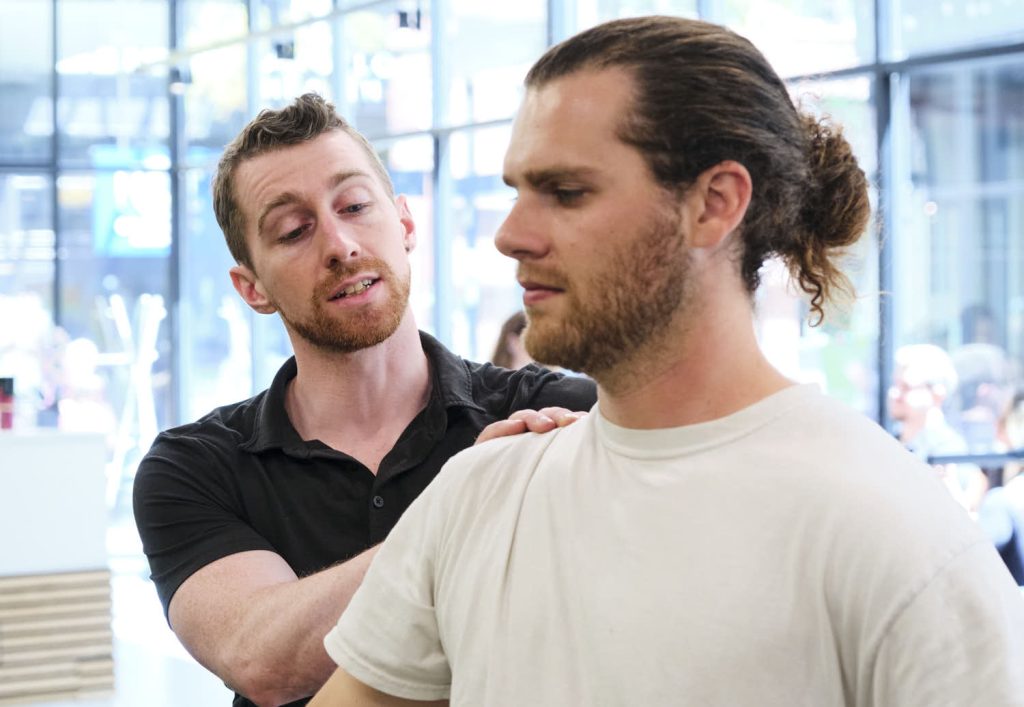
- Use gentle orthopedic and neurological tests to help differentiate muscle pain from nerve-related pain
This whole-person view helps us determine whether your symptoms are more consistent with dorsal scapular nerve entrapment, rotator cuff-related issues, or other causes of neck pain and upper back discomfort.
Chiropractic care for dorsal scapular nerve entrapment in Seattle
Nerve entrapment treatment in our Seattle clinics usually combines several tools to calm irritation, improve movement, and restore strength. While every plan is individualized, your care may include:
Gentle chiropractic adjustments
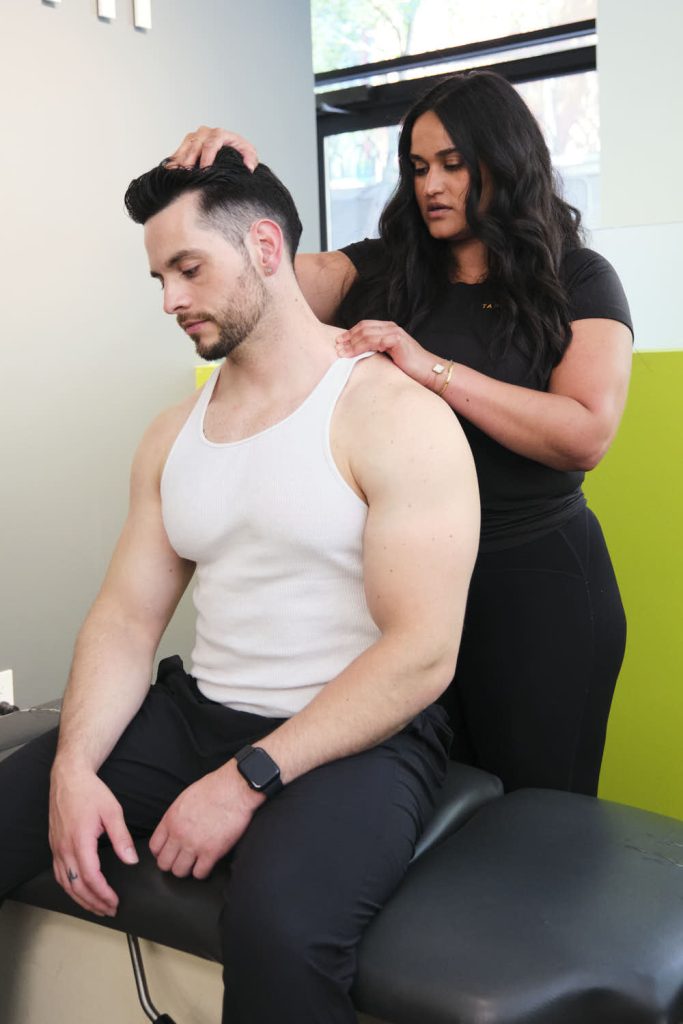
We may use targeted chiropractic adjustments to help improve mobility in the cervical spine and thoracic spine. Restoring motion in these areas can reduce excess strain on the tissues around the dorsal scapular nerve and may help decrease upper back nerve pain.
Manual therapy for nerve entrapment
Hands-on care aims to address the muscles and soft tissues that surround and influence the nerve. At our clinic, we may use:
- Active Release Techniques to gently release tight or overworked muscles along the nerve’s path
- The Graston Technique to address scar tissue and fascial restrictions that may contribute to nerve compression
- Cupping therapy to support circulation and ease tension around the shoulder blade
These manual therapies may help create more space and glide for the nerve, which can contribute to reduced dorsal scapular nerve pain and improved shoulder function.
Targeted exercise and functional rehabilitation
Dorsal scapular nerve entrapment exercises are often key to long-term progress. At Tangelo Health, we design functional rehabilitation programs that fit your body and your goals. Your plan may include:
- Scapular strengthening and control drills to support the rhomboid muscle and surrounding stabilizers
- Postural and endurance work for the upper back to help you tolerate desk work, lifting, or sport
- Progressive shoulder and rotator cuff strengthening, since strengthening programs can be effective for shoulder dysfunction and pain in many people with shoulder-related conditions.3
We may also incorporate dorsal scapular nerve flossing or gliding techniques as part of your home program. These gentle movements are designed to help the nerve move more freely through surrounding tissues without increasing irritation.
Supportive tools for comfort and performance
Depending on your needs, we may add:
- Kinesiology taping to support posture and shoulder blade positioning during activity
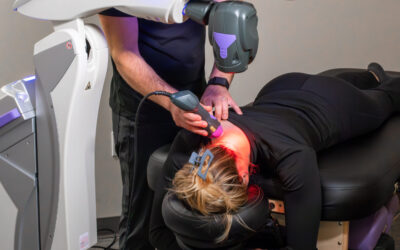
- MLS laser therapy to support tissue recovery and help calm sensitive areas
- Ergonomic and training tweaks so you can keep working or training with less irritation
We tailor these tools for active adults, athletes, and busy professionals who want to stay moving while they recover.
Dorsal scapular nerve entrapment exercises: our general approach
While we always individualize your program, dorsal scapular nerve entrapment exercises at our Seattle clinics often focus on three main pillars:
- Resetting posture and breathing: Gentle drills to open the chest, improve ribcage mobility, and reduce overactivity in the upper traps and levator scapulae.
- Building scapular strength and endurance: Progressions from low-load activation exercises to more demanding pulling, rowing, and overhead patterns as symptoms allow.
- Integrating whole-body movement: Full-body patterns that link the hips, trunk, and shoulders so your scapula can move smoothly during sport and daily life.
Our goal is not just to quiet scapular nerve pain, but to help you move with more confidence and resilience so flare-ups are less likely to return.
Chiropractic care in Green Lake and West Seattle for nerve pain
Whether you are looking for chiropractic care in Green Lake or a chiropractor for nerve pain in West Seattle, our Tangelo Health team focuses on active, personalized care. We aim to help you understand what is going on, what you can do at home, and how we can work together to get you back to the activities you enjoy—whether that’s lifting, running around Green Lake, or simply getting through your workday without constant upper back nerve pain.
FAQ: Dorsal scapular nerve entrapment
What is dorsal scapular nerve entrapment in simple terms?
It is irritation or compression of a small nerve that runs from your neck to the muscles along your shoulder blade. When this nerve is irritated, it can create focused pain along the inside of the scapula, often mistaken for a muscle knot or strain.
How do I know if my dorsal scapular nerve is involved?
Many people notice a deep, hard-to-reach ache or burning pain along the inner border of the shoulder blade that may worsen with pulling, rowing, or prolonged sitting. A thorough assessment with an experienced professional is usually the best way to sort out whether your symptoms are coming from the dorsal scapular nerve or from other sources of shoulder pain or neck pain.
Can a chiropractor help with dorsal scapular nerve pain?
Chiropractic care may help by improving spinal and shoulder blade mechanics, easing pressure on irritated tissues, and pairing manual therapy with specific exercise. At our clinic, we combine chiropractic adjustments, soft tissue work such as Active Release Techniques, and functional rehab to support nerve health and shoulder function.
Will I need imaging or injections?
Many people with dorsal scapular nerve entrapment do not need imaging or injections, especially when symptoms improve with movement-based care. In more complex cases, we can coordinate with other providers if additional testing or medical treatment is appropriate.
How long does dorsal scapular nerve entrapment take to improve?
Recovery time varies. Some people notice meaningful changes within a few weeks of consistent care and home exercises, while others with longer-standing or more complex issues may need more time. We will keep you updated on your progress and adjust your plan as your body adapts.
Discover support for dorsal scapular nerve entrapment at Tangelo
If you’re dealing with stubborn periscapular pain or think you may have dorsal scapular nerve entrapment, our Tangelo Health Seattle team is here to help you understand your options and build a plan that fits your lifestyle. Book an Appointment today.
References
- van Ooijen MR, et al. Prognostic Value of Selective Nerve Root Blocks Prior to Pulsed Radiofrequency in the Treatment of Patients With Chronic Radicular Pain: A Systematic Review. Pain Pract. 2026. doi:10.1111/papr.70132
- Sóstennes JDS, et al. Effects of Tibial Nerve Electrostimulation in Patients With Fecal Incontinence: A Systematic Review. Physiother Res Int. 2026. doi:10.1002/pri.70169
- Xia L. Effects of seven types of exercise in the treatment of rotator cuff-related shoulder pain (RCRSP): a systematic review and Bayesian network meta-analysis. J Orthop Surg Res. 2025. doi:10.1186/s13018-025-06514-4