If you are an active adult or athlete in Seattle, knee pain can quickly derail your training, daily routine, and confidence. Whether you run around Green Lake, play in local rec leagues, or stay active between a busy work schedule, lingering knee pain may turn simple movements like stairs, squats, or getting out of the car into a challenge. At Tangelo Health, our goal is to help you understand what may be causing your knee pain and how chiropractic care, soft tissue therapy, and functional rehab may support a safe return to the activities you enjoy.
What Causes Knee Pain in Active Adults and Athletes?
Knee pain in athletes often comes from a combination of overuse, muscle imbalance, and movement patterns that place extra stress on the joint. Common issues include patellofemoral syndrome (pain around or behind the kneecap), runner’s knee, iliotibial (IT) band syndrome, tendon irritation, and meniscus or cartilage injuries.
For some people, knee cartilage damage eventually leads to surgery or even total knee replacement. Many individuals are able to return to recreational sports after major knee surgery, but the time frame and comfort level can vary widely.1,3 That is one reason a clear, progressive rehab plan and ongoing knee care are so important for athletes at every level.
Why Knee Pain Deserves Early Attention
It can be tempting to “push through” knee pain if you are training for a race or in the middle of a season. However, ignoring early symptoms may allow minor irritation to develop into more persistent problems.
For older athletes, maintaining lower limb awareness and control (also known as proprioception) may help with balance, joint protection, and confident movement. Gentle movement practices have been shown to positively affect lower limb joint proprioception in adults over 55, including the knee.2 This highlights how targeted exercise and neuromuscular training may support knee stability and overall function as we age.
Can a Chiropractor Help with Knee Pain?
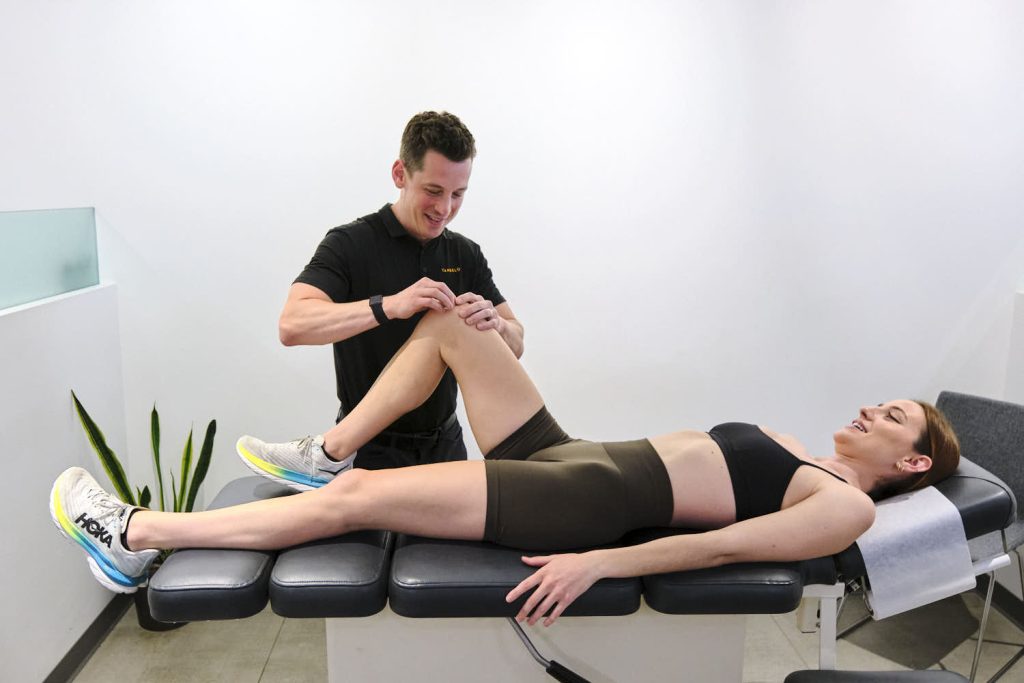
Many people are surprised to learn that a knee pain chiropractor does much more than adjust the spine. At our chiropractic and rehabilitation clinic in Seattle, we look at how your entire lower body moves—from your hips and low back to your ankles and feet—to understand why stress is building up at your knee.
Our chiropractic knee pain treatment often includes:
- Gentle joint adjustments for the knee, hip, ankle, and spine
- Soft tissue therapy for tight or irritated muscles and fascia
- Functional exercises to restore strength, balance, and control
- Education on training loads, warm-ups, and recovery
This whole-body approach may help address not just where you hurt, but why the pain started in the first place.
Knee Pain Treatment in Seattle: How We Approach It at Tangelo Health
At Tangelo Health, we see many runners, cyclists, lifters, and weekend warriors looking for knee pain treatment in neighborhoods like Green Lake, West Seattle, and across the city. As a sports injury clinic in West Seattle and Green Lake chiropractor team, we combine chiropractic care with rehab so your treatment is active, not passive.
Here is how we commonly structure chiropractic care for knee pain:
- Thorough evaluation – We start by listening to your story, reviewing how the pain began, and testing movement, strength, and balance. We also consider related issues such as low back pain, hip pain, or foot and ankle problems that may influence knee stress.
- Chiropractic adjustments – Targeted chiropractic adjustments may improve joint motion and alignment in the knee as well as the spine and hips, which can change how forces travel through your leg.
- Soft tissue therapy – Techniques like Active Release Techniques, the Graston Technique, and cupping are used as soft tissue therapy for knee pain. These methods may help ease tight or overworked muscles, reduce stiffness, and improve tissue glide—especially around the quadriceps, hamstrings, calves, and IT band.
- MLS laser therapy for knee pain – Our MLS Laser Therapy may support tissue healing and help reduce pain and inflammation in many knee conditions.
- Functional rehabilitation for the knee – Through functional rehabilitation, we build a customized exercise plan to improve strength, mobility, and control. This may include single-leg balance work, hip and glute strengthening, and sport-specific drills that prepare you to return to running, lifting, or court sports.
- Supportive techniques – Kinesiology taping is sometimes used to provide short-term support or awareness for the kneecap or IT band while you move and train.
Conditions We Commonly See: Runner’s Knee, IT Band Syndrome, and More
We regularly work with athletes dealing with:
- Runner’s knee / patellofemoral syndrome – Pain around or behind the kneecap, usually worse with stairs, squats, or hills. Our knee pain chiropractor in Seattle may focus on hip strength, quadriceps control, and kneecap tracking.
- Iliotibial band syndrome – Outer knee pain, especially in runners and cyclists. IT band syndrome treatment may include soft tissue therapy to the lateral thigh, hip stability exercises, and gait or bike-fit guidance.
- Tendon and overuse injuries – Many of our patients with tendonitis and sports injuries benefit from a mix of load management, progressive strengthening, and manual therapy.
- Post-surgical rehab – After cartilage procedures or knee replacement, most patients are able to return to play, though time frames can range from several months to almost a year depending on the procedure.1,3 Our role is to help you rebuild strength, confidence, and movement quality at each stage of that process, in close coordination with your surgeon’s guidelines.
For a deeper look at how we address knee pain in athletes, you can explore our page on knee pain.
Staying Active After Knee Injury or Surgery
Staying active is important for heart health, mental well-being, and long-term mobility. Many people do return to recreational sports after total knee arthroplasty, especially lower-impact activities, but participation levels vary widely.3 We recognize how important your sport or routine is to you, whether that means jogging a few times a week or playing competitive soccer.
Our team builds your plan around real-life demands: your job, commute, training schedule, and family responsibilities. The focus is on gradual, measurable progress so you can move from basic pain relief to performance and prevention.
FAQ: Knee Pain and Chiropractic Care in Seattle
Can a chiropractor help with knee pain even if I do not have back pain?
Yes. We frequently treat athletes whose main concern is knee pain, without significant back or neck symptoms. We still assess your spine and hips because they can influence how your knee moves, but your care plan is focused directly on your knee function and goals.
How long does chiropractic knee pain treatment usually take?
Timelines vary depending on how long you have had pain, the type of injury, and your training load. Many patients start noticing improvements in motion and comfort within a few visits, while more complex cases (like long-standing patellofemoral pain or post-surgical rehab) may require a longer plan. We re-evaluate regularly and adjust your plan based on your response.
Is it safe to stay active while I am being treated?
In many cases, yes—staying active at an appropriate level is part of recovery. We help you modify your training so you can keep moving without overloading the knee. That might mean changing mileage, terrain, or strength routines while we build capacity and control around the joint.
What if my knee pain started after an accident?
We see many patients with knee pain after falls, sports collisions, and auto injuries. Our team screens for issues like whiplash, shoulder pain, and other joint problems that can show up after a crash, then creates an integrated plan to address all affected areas.
Do you work with older athletes or people with joint replacements?
Absolutely. Many of our patients are in their 50s, 60s, or beyond and want to keep hiking, golfing, cycling, or lifting. For those who have had knee surgery, collaborative rehab and smart exercise progressions may help support a safe return to recreational activity over time.1,3 We tailor intensity and technique to your comfort level and medical history.
If you are looking for chiropractic care for knee pain, runner’s knee treatment, or IT band syndrome treatment in Seattle and want a plan that combines hands-on care with smart movement, our team is here to help you move better, feel better, and get back to the activities you love. Book an Appointment
Tangelo Health – Chiropractic & Rehabilitation in Seattle
References
- Hurley ET, et al. Return-to-Play and Rehabilitation Protocols following Cartilage Restoration Procedures of the Knee: A Systematic Review. Cartilage. 2021. doi:10.1177/1947603519894733
- Zou L, et al. Effects of Tai Chi on Lower Limb Proprioception in Adults Aged Over 55: A Systematic Review and Meta-Analysis. Arch Phys Med Rehabil. 2019. doi:10.1016/j.apmr.2018.07.425
- Barber-Westin SD, et al. Aerobic Physical Fitness and Recreational Sports Participation After Total Knee Arthroplasty. Sports Health. 2016. doi:10.1177/1941738116670090