
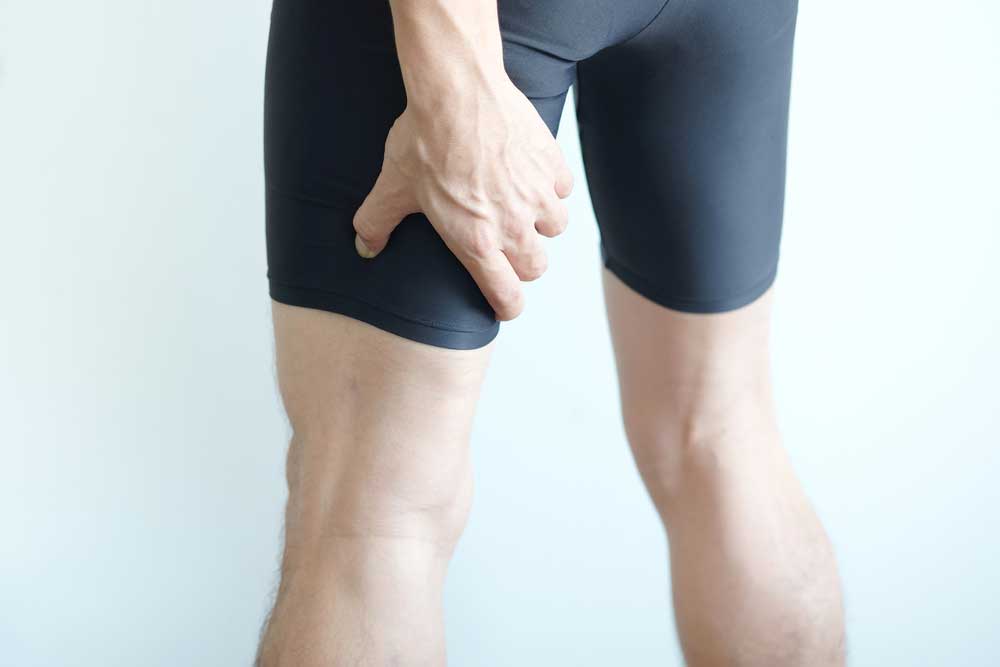
 A pulled hamstring can make walking, climbing stairs and sports uncomfortable. If you’ve strained yours, you may be wondering how long healing takes and what you can safely do now. Many strains improve without surgery. Here’s how to manage symptoms, rebuild strength and work toward your normal activities, with support from Tangelo Health in Seattle.
What Is a Hamstring Strain?
Your hamstrings are three muscles along the back of your thigh that help you bend your knee and extend your hip. A strain happens when their fibers are overstretched or torn. There are three grades:
- Grade I (mild):A small number of muscle fibers are affected. You may experience mild discomfort or tightness but can usually still walk.
- Grade II (moderate):A partial muscle tear that can cause noticeable pain, swelling, bruising and difficulty bending your knee or walking.
- Grade III (severe):A complete or nearly complete tear that can cause significant pain, weakness and difficulty using the affected leg.
Hamstring pain can also overlap with symptoms related to hip pain, knee pain and lower back pain, making a proper assessment important.
Common Symptoms of a Hamstring Strain
Common symptoms include:
- Sharp or sudden pain in the back of your thigh
- A persistent ache or pulling sensation
- Tenderness when touching the injured area
- Swelling or bruising
- Difficulty straightening your leg or bending your knee
- Muscle weakness or reduced range of motion
- Discomfort when walking, running or climbing stairs
If you experience severe pain, extensive bruising, significant weakness or difficulty putting weight on your leg, seek medical attention. These symptoms may indicate a more serious injury.
How Did I Pull My Hamstring?
Strains often occur during sprinting, jumping or sudden changes of direction. Risk factors include:
- Repetitive activity:Frequent running, lifting or high-intensity training without enough recovery time.
- Previous hamstring injuries:An earlier strain may increase your risk of another injury.
- Inadequate warm-ups:Beginning strenuous exercise before gradually preparing your muscles.
- Limited strength or mobility:Muscle weakness or restricted movement can affect how your legs handle physical demands.
- Training errors:Increasing your workout intensity, distance or frequency too quickly.
- Returning to activity too soon:Resuming demanding exercise before your hamstring has regained enough strength and function.
A slip or awkward everyday movement can cause a strain, too.
What Helps a Hamstring Strain Heal Faster?
There’s no instant fix. Three recovery priorities are:
1. Protecting the Injury Without Avoiding All Movement
Avoid activities that increase pain, but don’t assume you need complete bed rest. Gentle, comfortable movement may be appropriate, depending on the injury.
2. Gradually Rebuilding Strength
As symptoms improve, progress from gentle contractions to more demanding strengthening with guidance from your healthcare provider.
3. Staying Consistent With Rehabilitation
Keep following your plan even when pain improves. Research links consistent exercise-based prevention programs with fewer hamstring injuries in football players.¹ Tangelo Health offers individualized functional rehabilitation.
The Role of Strengthening in Hamstring Rehabilitation
Rebuilding strength matters for returning to activity. Eccentric strengthening trains a muscle as it lengthens under resistance. The Nordic hamstring exercise, in which you lower your torso while your ankles are supported, is one example.
A 2025 research review found that Nordic hamstring exercises can improve hamstring strength. The findings also suggested that extremely high training volumes aren’t necessary for many people to see improvements.³
Your program may progress through:
- Gentle hamstring contractions
- Bridges and other bodyweight exercises
- Resistance band exercises
- Eccentric hamstring slideouts
- More advanced exercises, such as Nordic hamstring curls
Advanced exercises aren’t appropriate for every stage of recovery.
Related exercise video: Eccentric Hamstring Slideouts
Home Care for a Pulled Hamstring
Home care depends on injury severity but may include:
- Relative rest:Temporarily avoid running, jumping or movements that worsen your symptoms.
- Cold therapy:Apply a cold pack wrapped in a towel for approximately 15–20 minutes at a time during the early stages to help manage pain.
- Compression:A comfortably fitted elastic wrap may help manage swelling.
- Elevation:When practical, resting with your leg supported may help with swelling.
- Gentle movement:Gradually introduce comfortable movement as symptoms allow.
- Progressive strengthening:Follow the exercises recommended by your healthcare provider as your recovery progresses.
Avoid aggressive early stretching. Less pain doesn’t necessarily mean the muscle is ready for full activity; ask your provider how to progress safely.
How We Treat Hamstring Injuries at Tangelo Health
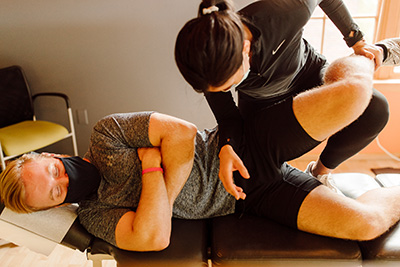
Treatment begins with an assessment of your symptoms, strength, hip and knee movement, and daily activities. Depending on your needs, care may include:
- Chiropractic adjustments:Techniques that may help improve joint movement in the spine, pelvis or hips when mobility limitations are contributing to discomfort.
- Active Release Techniques (ART):Hands-on soft tissue therapy used to address muscle tightness and movement restrictions.
- Graston Techniqueand cupping therapy: Supportive techniques that may help manage muscle discomfort and soft tissue restrictions when appropriate.
- Functional rehabilitation:Progressive exercises designed to restore strength, mobility, balance and confidence during everyday activities.
- MLS laser therapyand kinesiology taping: Additional options, including RockTape, that may be used to support comfort and activity tolerance.
Treatment is individualized. Our team also considers how your hips, knees and lower back move together.
Can Anything Speed Up Your Return to Sport?
PRP injections and laser therapy are sometimes discussed in sports recovery.
Platelet-Rich Plasma (PRP) Injections
A 2026 systematic review found that PRP injections may shorten return-to-play time after acute hamstring injuries by approximately nine days on average. However, the researchers noted that results varied considerably and the certainty of the evidence was limited.²
Tangelo Health does not provide injections. Ask your healthcare provider whether further evaluation is appropriate.
Laser Therapy
One 2022 study found improvements in pain among athletes with proximal hamstring tendinopathy who received high-power laser therapy.⁴
However, tendinopathy affects the tendon and isn’t the same as an acute hamstring muscle strain. These findings don’t establish that laser therapy will shorten recovery time after a muscle tear.
Return to activity should still be guided by your strength, movement and symptoms.
How to Sleep With a Pulled Hamstring
Try different positions to support your injured leg comfortably:
- Try sleeping on your back:Placing a pillow under your knees may help support your legs and reduce uncomfortable tension.
- Experiment with side sleeping:If you prefer lying on your side, try placing a pillow between your knees for additional support.
- Keep movement gentle before bed:Light, comfortable mobility exercises recommended by your provider may help manage stiffness.
A straight or slightly bent knee can both be reasonable if comfortable. If pain repeatedly interrupts sleep, speak with your healthcare provider.
How to Avoid Getting a Hamstring Strain
Eight habits may help reduce your risk of another injury:
- Warm up before exercise.Start with lighter movements and gradually increase intensity before running, lifting or playing sports.
- Strengthen your hamstrings regularly.Include appropriate resistance exercises that improve muscle strength and control.
- Increase activity gradually.Avoid sudden increases in running distance, workout intensity or training frequency.
- Pay attention to pain.Don’t push through sharp pain or symptoms that suggest an injury.
- Allow enough recovery time.Give your body time to heal before returning to demanding activities.
- Practice proper exercise techniques.Work on movement patterns that help you train safely and efficiently.
- Prepare for upcoming events.Build your strength and endurance gradually instead of dramatically increasing training at the last minute.
- Seek professional guidance when needed.If you’ve experienced repeated strains or ongoing discomfort, a sports chiropractor or rehabilitation professional can assess your movement and help develop an appropriate plan.
Consistent strengthening is linked with fewer hamstring strains in football players.¹ Choose a routine you can maintain.
Three Hamstring Exercise Videos to Explore
1. How to Foam Roll Your Hamstrings
Foam rolling may help temporarily manage muscle tightness and improve comfort. Avoid directly rolling over an acutely injured or significantly painful area.
Watch How to Foam Roll Your Hamstrings
2. Eccentric Hamstring Slideouts
This strengthening exercise challenges the hamstrings as they lengthen. It may be introduced during an appropriate stage of rehabilitation.
Watch Eccentric Hamstring Slideouts
3. A Simple but Effective Way to Blast Your Hamstrings
This video demonstrates another hamstring-focused exercise that may help build strength as part of a training program.
Watch A Simple but Effective Way to Blast Your Hamstrings
Note: Exercises should suit your recovery stage; ask your provider before attempting painful or high-load movements.
Frequently Asked Questions About Hamstring Strains
How long does a pulled hamstring take to heal?
Mild strains may improve within a couple of weeks; moderate injuries take longer, and severe tears may require months or occasionally surgery. Your return to activity depends on restored strength and function, not pain alone.
Can I heal a pulled hamstring in two days?
No. Pain may settle quickly, but the tissue takes longer to heal. Returning to demanding activity too soon raises the risk of another injury.
What is the best sleeping position for hamstring pain?
Try lying on your back with a pillow under your knees or on your side with a pillow between them. Avoid positions that pull painfully on the muscle.
Do I need imaging for a hamstring strain?
Not always. A physical examination is often enough, but imaging may be recommended for a suspected severe tear, unusual symptoms or delayed progress.
How can a sports chiropractor in Seattle help with my hamstring?
At Tangelo Health, assessment and individualized chiropractic care may be combined with functional rehabilitation to address movement limitations, rebuild strength and support your return to activity.
Visit Tangelo Health in Green Lake or West Seattle
Whether you’re recovering from a recent strain or recurring discomfort, Tangelo Health offers individualized care to help restore movement and strength. Visit our Green Lake or West Seattle location to get started.
References
- Gu, J., et al. (2026). Intervention components, training dose, and adherence in exercise-based prevention of hamstring strain injury in football: A systematic review and meta-analysis. Annals of Medicine. https://doi.org/10.1080/07853890.2026.2652116
- Nakagawa, H., et al. (2026). Effects of percutaneous platelet-rich plasma injection on return-to-play after acute hamstring muscle injury: A systematic review and meta-analysis. British Journal of Sports Medicine. https://doi.org/10.1136/bjsports-2025-110683
- Franke, R. A., Rodrigues, R., Lopez, P., Nakamura, F. Y., & Baroni, B. M. (2025). Dose-response relationship for strength gains from Nordic hamstring exercise: A systematic review, meta-analysis, and meta-regression. Journal of Strength and Conditioning Research, 39(10), 1088–1104. https://doi.org/10.1519/JSC.0000000000005184
- Verma, S., Esht, V., Chahal, A., et al. (2022). Effectiveness of high power laser therapy on pain and isokinetic peak torque in athletes with proximal hamstring tendinopathy: A randomized trial. BioMed Research International, 2022, 4133883. https://doi.org/10.1155/2022/4133883