
A fender bender can feel minor in the moment. You drive home feeling fine. Then a day or two later, your neck is stiff, checking your blind spot hurts, and a dull headache has settled in at the base of your skull. That pattern is common with whiplash after a car accident, and it’s one Dr. Mike Smith sees regularly at Tangelo Health’s West Seattle clinic. Here’s how Dr. Smith approaches car accident whiplash, from understanding what happened to building a plan that helps you move comfortably again.
What Causes Whiplash After a Car Accident?
Whiplash is a neck injury caused by a forceful, rapid back-and-forth movement of the head, much like the cracking of a whip [1]. Among whiplash causes, rear-end collisions are the most common, though side impacts and falls can create similar forces. That sudden motion strains the muscles, ligaments, and joints of the cervical spine, and it can contribute to related spinal injuries in the upper back.
Common whiplash symptoms include:
- Neck pain, stiffness, and reduced range of motion
- Headaches, often starting at the base of the skull
- Pain or tenderness in the shoulders, upper back, or arms
- Tingling or numbness in the arms
- Fatigue, dizziness, or trouble concentrating
Why Delayed Symptoms Matter
Delayed symptoms are easy to overlook. Whiplash symptoms most often start within days of the injury rather than at the scene [1]. That’s why Dr. Smith encourages people to get assessed after a collision, even if they felt fine walking away.
Dr. Smith’s Three-Step Whiplash Treatment Approach
As a Certified Chiropractic Sports Practitioner and Primary Spine Practitioner, Dr. Mike Smith brings the same philosophy to every whiplash injury treatment plan: create clarity, identify the cause, and develop a clear, reasonable path forward.
Step 1: Create Clarity on Your History and Goals
Every collision is different. Dr. Smith starts by learning how the accident happened, when your symptoms began, and what you want to get back to, whether that’s sleeping comfortably, working at your desk, or returning to the gym.
Step 2: Identify What Is Causing Your Pain
Next comes a thorough diagnosis process. Alongside a hands-on exam, Dr. Smith uses the Selective Functional Movement Assessment (SFMA) to see how your neck, upper back, and shoulders move together. The goal is to pinpoint which joints, muscles, or movement patterns are contributing to your pain, and to flag anything that may need imaging or a referral.

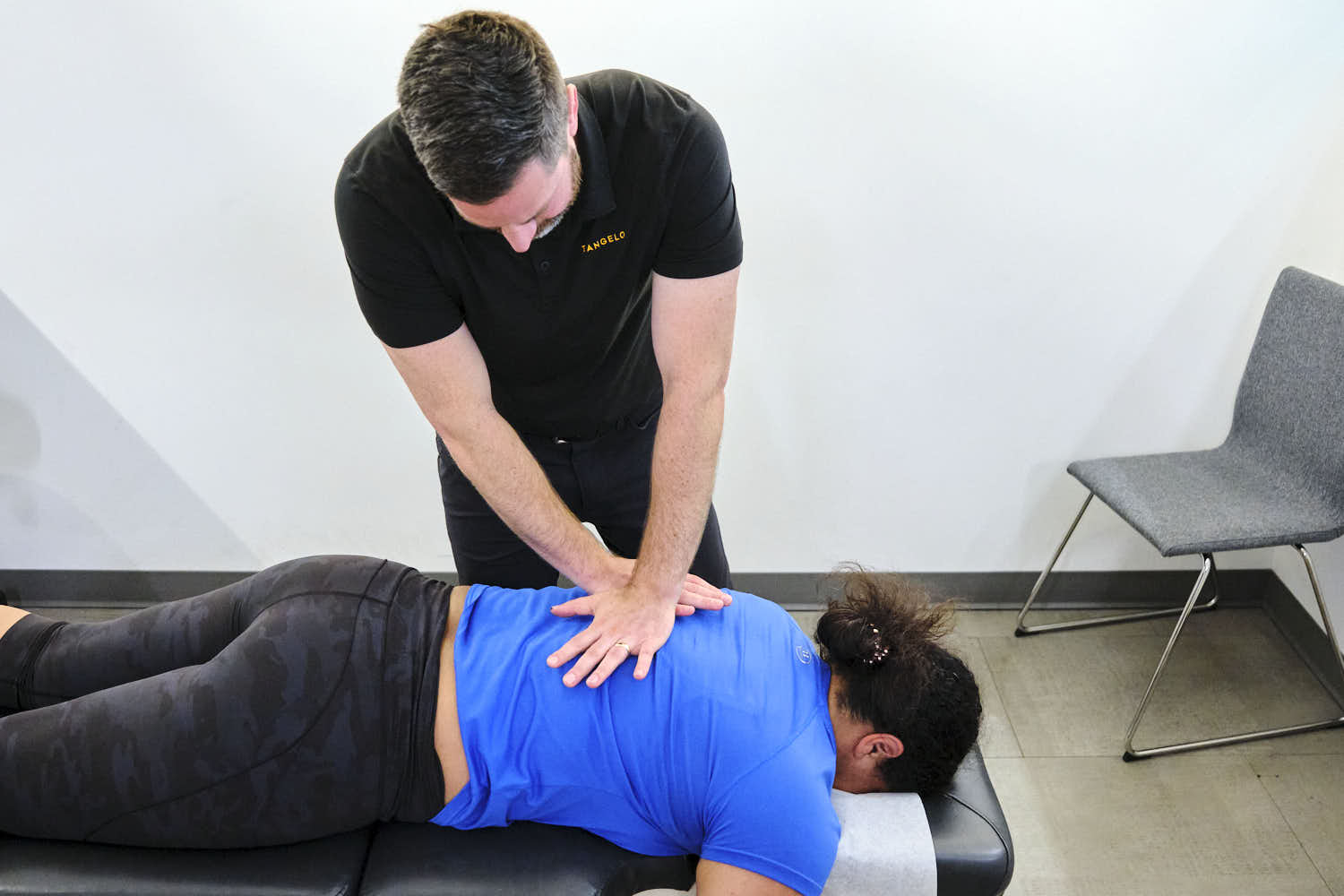
With a clear picture, Dr. Smith builds a plan that is reassessed as you progress, so your care keeps pace with how your body is responding.personalized treatment approach that may combine:
- Chiropractic adjustments to help improve joint motion in the neck and upper back
- Active Release Techniques and Graston Technique to help address tight, irritated soft tissue
- Movement rehabilitation with guided exercises to help rebuild strength, mobility, and control
Your plan is reassessed as you progress, so your care keeps pace with how your body is responding.
Your Whiplash Recovery Timeline and When to Seek Care
Most people with whiplash get better within a few weeks by following a treatment plan, although some people have pain for months or longer [1]. Your recovery timeline depends on the severity of the collision, previous neck issues, and the physical demands of your daily life.
Knowing when to seek care matters. After any significant collision, see a medical professional first to rule out serious injury. If you notice numbness, weakness, worsening headaches, or pain that isn’t easing, book an assessment promptly. Our auto injury care page explains how Tangelo supports patients after a crash.
Frequently Asked Questions
How long after a car accident can whiplash symptoms appear?
Symptoms often start within days of a collision [1], sometimes 24 to 72 hours later. If new stiffness or headaches show up after a crash, it’s worth booking an assessment.
Can a whiplash chiropractor help after a car accident?
A chiropractor can assess how the injury is affecting your neck and upper back, then build a plan to support recovery. At Tangelo, that plan often combines adjustments, soft tissue therapy, and functional rehabilitation.
Can whiplash cause headaches?
Yes. Headaches, especially at the base of the skull, are a common whiplash symptom [1]. Addressing joint and muscle tension in the neck may help reduce how often they occur. Learn more about our headache care.
What does whiplash rehabilitation involve?
Movement rehabilitation focuses on guided exercises that help rebuild neck strength, mobility, and control. Your chiropractor progresses them as you improve and provides a home program to support recovery between visits.
Ready to Take the Next Step?
Neck pain, headaches, and stiffness after a car accident can make everyday activities harder than they should be. Dr. Mike Smith can assess your symptoms, identify what may be contributing to your discomfort, and create a personalized plan based on your recovery goals.
References
- Mayo Clinic Staff. (n.d.). Whiplash: Symptoms and causes. Mayo Clinic. https://www.mayoclinic.org/diseases-conditions/whiplash/symptoms-causes/syc-20378921

Dr. Mike Smith, Chiropractor (DC, CCSP®, PSP)
Dr. Smith is a sports chiropractor and Director of Practice Operations at Tangelo who specializes in diagnosing and treating acute and chronic muscle, bone, and joint pain, including back pain, disc injuries, sciatica, and whiplash.