
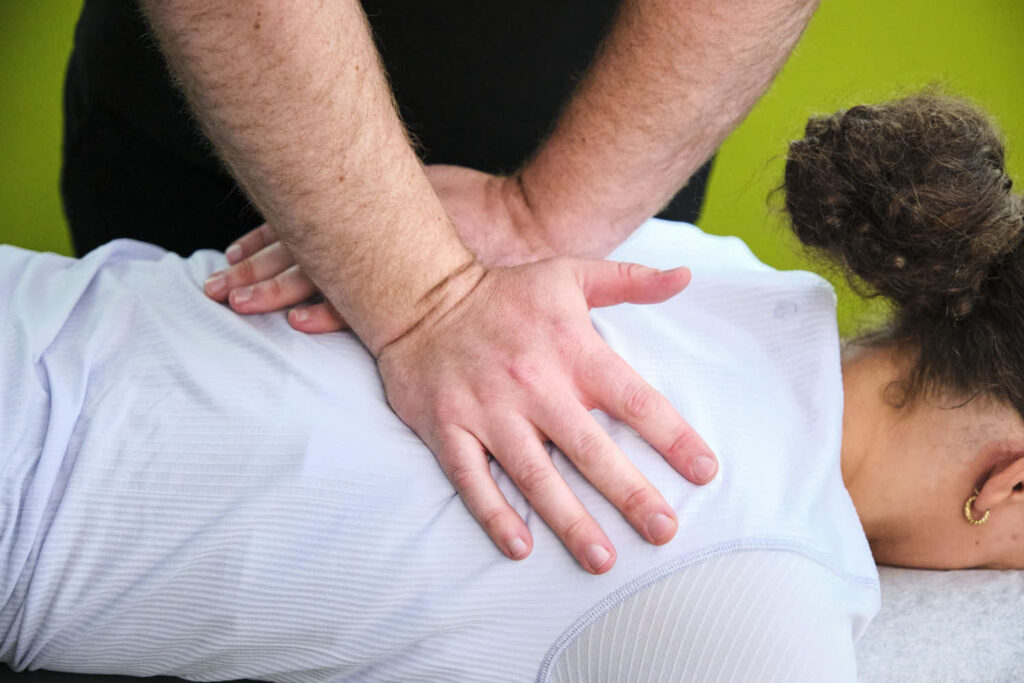
Living with a herniated or bulging disc can make even simple daily tasks feel exhausting. If you are active, athletic, or juggling work and family, ongoing back or neck pain can be especially frustrating. At Tangelo Health in Seattle, we work with many patients who want a non-surgical, movement-focused way to manage disc-related pain and get back to the activities they enjoy.
Spinal decompression therapy is one of the tools we may use as part of a personalized care plan for herniated and bulging discs. In this post, we’ll walk you through what spinal decompression is, how it may help, and how we combine it with chiropractic care and rehabilitation to support long-term results.
Understanding Herniated and Bulging Discs
The spine is made up of a series of bones (vertebrae) with soft cushions between them called intervertebral discs. These discs act like shock absorbers and help your spine move smoothly.
A bulging or herniated disc happens when part of the disc pushes outward. This can narrow the space around nearby nerves and may lead to nerve compression, causing symptoms such as:
- Localized low back pain or neck pain
- Pain that travels down the leg or arm (disc-related nerve pain or sciatica)
- Numbness, tingling, or weakness
- Stiffness and limited movement
Many of the people we see at our clinic are dealing with disc issues in the lumbar spine (low back) or cervical spine (neck) and are looking for non-surgical disc treatment options such as spinal decompression treatment, chiropractic care, and active rehabilitation.
What Is Spinal Decompression Therapy and How Does It Work?
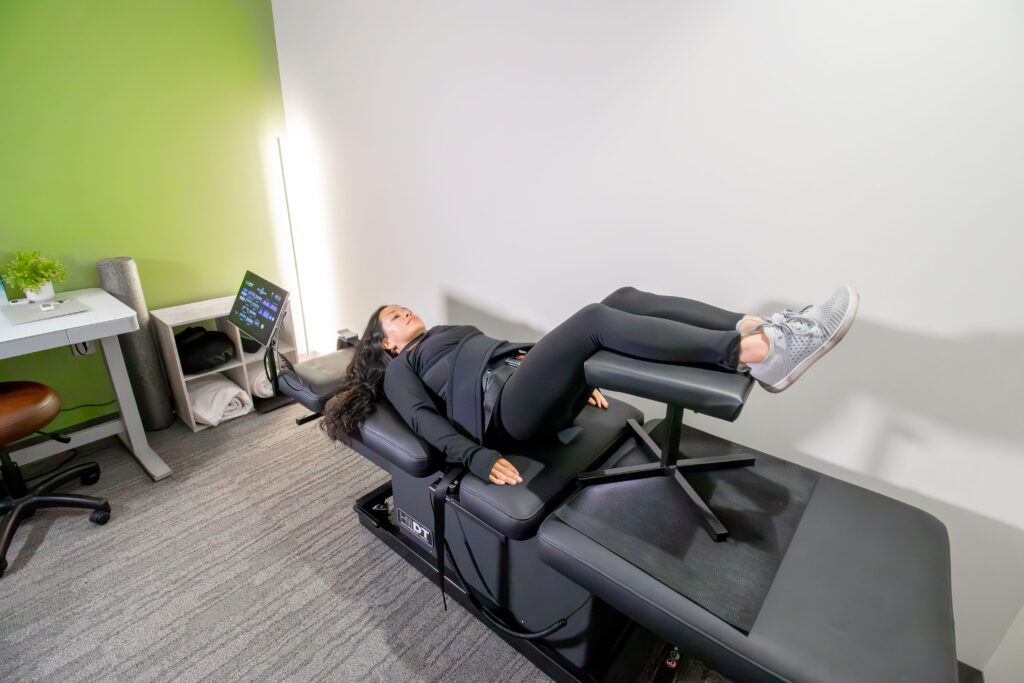
Spinal decompression therapy is a non-surgical treatment that uses a specialized decompression table to gently stretch the spine in a controlled way. During decompression table therapy, you are secured comfortably while the table applies carefully programmed traction and release cycles to the spine.
This type of lumbar decompression therapy or cervical decompression therapy is designed to:
- Reduce disc pressure within the spine (helping to reduce disc pressure on nearby nerves)
- Create a mild “pumping” effect in the discs that may support fluid exchange and nutrient movement
- Encourage better spinal alignment and improve overall spinal mechanics
At Tangelo Health, we often pair spinal decompression therapy with chiropractic treatment and functional rehabilitation so that the changes you feel on the table are supported by stronger, more resilient muscles and better movement patterns.
How Spinal Decompression May Help Herniated and Bulging Discs
While every case is different, decompression may help by:
- Gently separating the vertebrae, which can contribute to reducing pressure on a herniated or bulging disc
- Reducing nerve compression, which may ease radiating pain, numbness, or tingling in the arms or legs
- Supporting spinal alignment therapy goals and helping the spine move in a more balanced way
- Providing a non-invasive option for chronic back pain treatment and disc-related nerve pain
In our experience, spinal decompression often works best as part of a broader herniated disc decompression plan that includes chiropractic treatment of lower back pain, manual therapy, and progressive exercises.
Why We Combine Decompression with Active Rehab
At Tangelo Health, we rarely rely on a single technique. Our team focuses on restoring strength, control, and confidence in movement so your results are more likely to last.
There is evidence that targeted stabilization and core exercises may reduce pain and functional disability in people with non-specific chronic lumbopelvic pain, while also improving balance and the ability to perform dynamic tasks.(1) This aligns with our rehab-forward approach.
That is why we often combine spinal decompression treatment with:
- Chiropractic adjustments to help improve joint motion and spinal alignment
- Manual therapies like Active Release Techniques, the Graston Technique, and cupping to address muscle tension and soft tissue restrictions
- Functional rehabilitation therapy to build core strength, hip stability, and movement control
- MLS laser therapy when appropriate, as an additional non-invasive modality
By addressing both the disc and the way your body moves, we aim to reduce pain and help you return to running, lifting, or simply sitting at your desk without constant discomfort.
Decompression vs. Medication-Based Approaches
Many people with disc-related low back pain are first offered medications such as non-steroidal anti-inflammatory drugs (NSAIDs). These medications may help manage pain in the short term, but they do not directly address spinal mechanics, posture, or muscular control.
At the same time, there can be challenges in clearly understanding the long-term impact of NSAIDs for low back pain because available clinical data are limited and often difficult to obtain for detailed analysis.(2)
Because of this, we often see active adults looking for options beyond medication alone. Non-surgical disc treatment approaches like spinal decompression therapy, manual therapy, and rehabilitation focus on movement, alignment, and strength, which may contribute to longer-term improvements in function.
Our Step-by-Step Approach at Tangelo Health
When you visit our Seattle clinic for herniated disc treatment or bulging disc treatment, we start by listening to your story. From there, we perform a detailed movement and orthopedic assessment to understand:
- Where your pain is coming from (disc, joints, muscles, or a combination)
- How your spine, hips, and shoulders are moving
- What activities or positions make symptoms better or worse
Based on this, your personalized plan may include:
- Spinal decompression therapy to reduce disc and nerve pressure
- Chiropractic care and spinal alignment therapy to improve joint motion
- Manual therapies for tight or guarded muscles
- Core and stabilization exercises tailored to your sport or daily demands(1)
- Education on posture, movement strategies, and activity modification
Our goal is not only to calm down your current flare-up, but also to give you the tools to keep moving confidently, whether you are training for a race, lifting in the gym, or managing a busy workday.
FAQs About Spinal Decompression Therapy
What is spinal decompression therapy and how does it work?
Spinal decompression therapy is a non-surgical disc treatment performed on a decompression table that gently stretches your spine in controlled cycles. This process is designed to reduce disc pressure, create more space around irritated nerves, and support better spinal alignment. Many people find that this helps ease low back or neck pain, leg or arm symptoms, and stiffness, especially when combined with chiropractic treatment and rehabilitation exercises.
Can spinal decompression help a herniated disc without surgery?
For many patients with a herniated disc or slipped disc, spinal decompression may be a helpful non-surgical option. By reducing pressure on the disc and nearby nerves, decompression can contribute to meaningful relief from chronic back pain and disc-related nerve pain. We typically pair decompression with active stabilization exercises, which may further reduce pain and disability in people with chronic lumbopelvic pain.(1)
Is spinal decompression effective for bulging discs?
Bulging discs often respond well to a combination of decompression, chiropractic care, and movement-based rehabilitation. Decompression may help reduce disc pressure, while manual therapy and targeted exercises support better range of motion, strength, and function, which are key outcomes in manual and spinal care approaches.(3)
How long does it take to see results from spinal decompression therapy?
The timeline is different for each person, depending on the severity of the disc issue, how long symptoms have been present, and your overall activity level. Some people notice changes in comfort or mobility within the first few sessions, while others see more gradual improvement over several weeks. We regularly reassess your progress and adjust your plan so that spinal decompression treatment, chiropractic care, and rehab are aligned with your goals.
Who is a good candidate for spinal decompression treatment?
Spinal decompression may be appropriate if you have a herniated disc, bulging disc, disc-related sciatica, spinal degeneration, or chronic low back or neck pain that has not responded well to rest and basic self-care. At our clinic, we also look at your activity demands, overall health, and imaging (if available) to determine whether decompression, chiropractic treatment, another approach, or a combination is the best fit for you.
Taking the Next Step Toward Relief
If disc-related pain is keeping you from running, lifting, working, or doing the activities you love, there are non-surgical options that may help. At Tangelo Health in Seattle, we blend spinal decompression therapy, chiropractic care, manual therapy, and functional rehabilitation to create a plan tailored to you—so you can move with less pain and more confidence.
References
- Alkhameys FA, et al. Stabilization Exercises for Enhancing Balance in Adults With Non-Specific Chronic Lumbopelvic Pain: A Systematic Review and Meta-Analysis. Physiother Res Int. 2026. doi:10.1002/pri.70200
- Fu Y, et al. Challenges in conducting an individual participant data meta-analysis of non-steroidal anti-inflammatory drugs for patients with (sub)acute low back pain: a systematic review and report on data availability. BMJ Open. 2026. doi:10.1136/bmjopen-2025-102349
- Brier M, et al. Assessing the impact of manual therapy in the management of nonspecific low back pain: a scoping review of the outcomes used in clinical trials. BMC Complement Med Ther. 2026. doi:10.1186/s12906-026-05288-4