
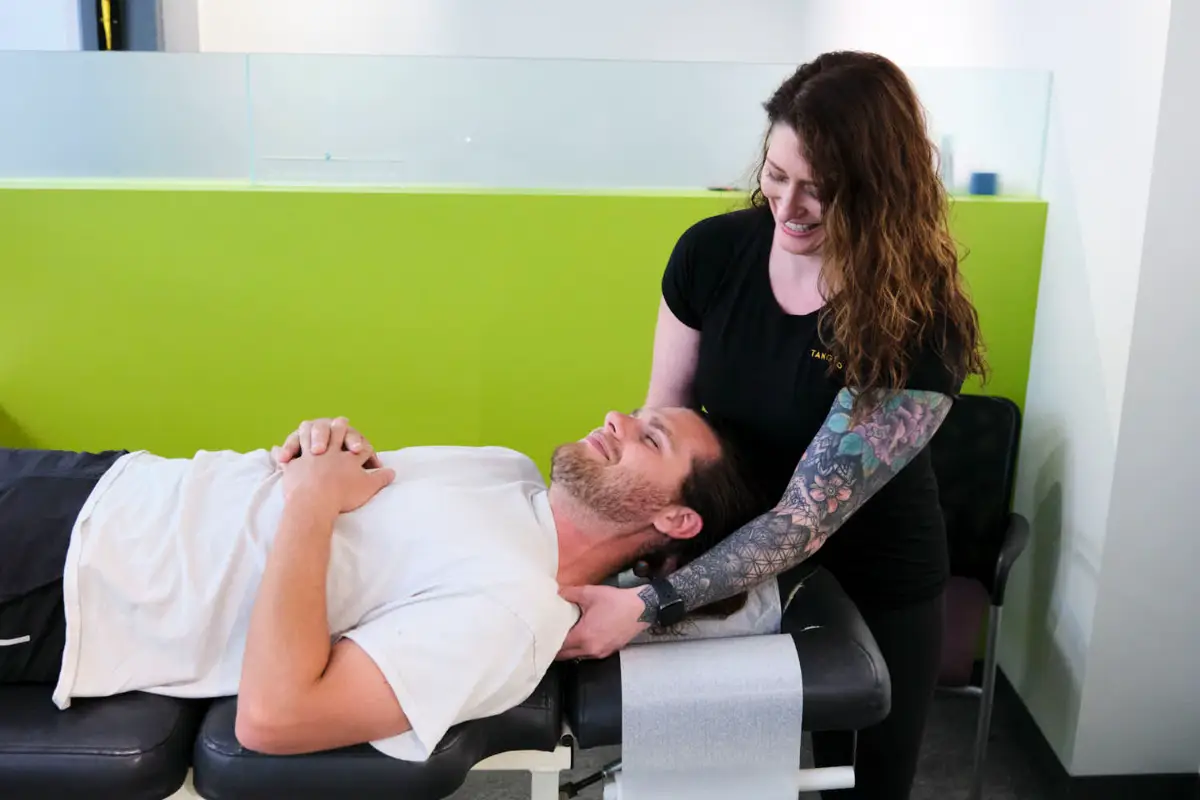
Sports should challenge your body, not leave you sidelined with burning, tingling, or sharp nerve pain. At Tangelo Health in Seattle, we work with athletes and active adults every day who are dealing with nerve compression from sports injuries—sometimes called a “pinched nerve.” Whether it is from a herniated disc, tight soft tissues, or irritated joints, our goal is to help you understand what is going on and guide you back to the activities you enjoy.
What Causes Nerve Compression in Sports Injuries?
Nerve compression in sports often happens when nearby structures, such as muscles, tendons, ligaments, discs, or joints, put too much pressure on a nerve. This can happen in the spine (spinal nerves) or in the arms and legs (peripheral nerves). Common situations include:
- Sudden impact or awkward landings
- Overuse and repetitive strain (for example, swinging, gripping, or overhead motions)
- Prolonged poor posture during training, work, or screen time
- Joint dysfunction or loss of normal spinal alignment
- Soft tissue tightness or thickening around nerves
In the neck and upper back, long hours in a forward‑head, rounded‑shoulder position may contribute to muscle imbalances, neck pain, and shoulder pain, and can be linked with nerve-related problems such as impingement and thoracic outlet–type symptoms.(1) For athletes who also work at a desk, this combination of training load and posture can be a key factor in nerve compression.
Common Sports-Related Nerve Compression Issues We See
Because nerves travel through tight spaces in the body, many sports-related nerve issues show up in predictable places. At our clinic, we commonly see:
- Low back pain and sciatica-like leg symptoms from herniated or bulging discs (herniated disc decompression and bulging disc treatment Seattle are frequent search terms for a reason)
- Neck and shoulder nerve irritation associated with postural strain, muscle imbalance, and overuse, often tied to upper crossed patterns of tight and weak muscles(1)
- Wrist and hand issues from gripping sports (racquet sports, weightlifting, climbing), which can involve overuse injuries and carpal-tunnel-type patterns(3)
- Hip and gluteal nerve irritation in runners, field athletes, and lifters, often linked to hip strain, tight soft tissues, and joint restrictions
Wrist and hand pain have a broad range of causes, from overuse injuries to joint arthritis, and often require careful assessment to differentiate between tendon problems, joint issues, and nerve compression such as carpal tunnel syndrome.(3) That is why a thorough evaluation is so important before starting care.
How Chiropractors Assess Sports-Related Nerve Compression
At Tangelo, our first priority is to understand where your symptoms are coming from. Nerve pain from sports injuries can feel similar in different conditions, so we take time to test each layer—spine, joints, muscles, and nerves.
During your visit, we may:
- Review your sport, training load, and work demands (for example, long hours at a computer)
- Assess posture, including forward head position and rounded shoulders, which are linked to neck and shoulder complaints in people who spend much of the day at a computer(1)
- Check joint motion and spinal alignment in the neck, mid-back, low back, hips, and extremities
- Perform orthopedic and neurological tests to look for nerve impingement or compression
- Examine soft tissues for tightness, trigger points, or thickening that may affect nerves
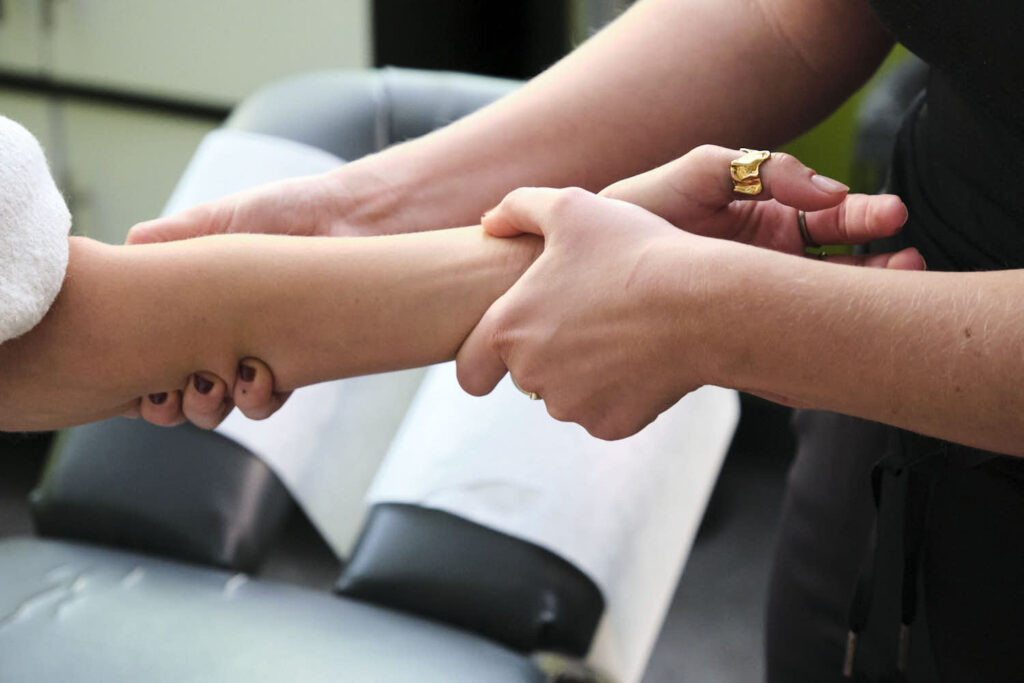
When wrist and hand pain is part of the picture, we pay close attention to the structures around the carpal tunnel and other small joint spaces in the hand, which are commonly involved in overuse and nerve-related wrist conditions.(2) If imaging is needed, we may coordinate with your broader care team.
Chiropractic Treatment Options for Sports-Related Nerve Compression
Chiropractic treatment for nerve compression from sports injuries usually works on three levels:
- Reducing irritation on the nerve
- Improving how the surrounding joints and soft tissues move
- Re‑training movement so the problem is less likely to return
Spinal and Joint Adjustments
Gentle chiropractic adjustments may help improve spinal alignment and joint motion, which can reduce mechanical pressure on spinal nerves and improve overall function. This type of spinal decompression chiropractic care can be part of a spinal decompression treatment approach for people searching for herniated disc treatment or bulging disc treatment Seattle.
Soft Tissue and Manual Therapy for Nerve Pain
Soft tissue injuries and overuse injuries around a nerve often respond well to hands-on care. At our clinic, we may use:
- Active Release Techniques to address tight muscles and soft tissue adhesions that can affect peripheral nerves
- The Graston Technique to work on scar tissue and restricted fascia around irritated areas
- Cupping to promote circulation and reduce local muscle tension
- Kinesiology taping to support movement patterns and offload irritated tissues
This kind of manual therapy for nerve pain may help relieve tension and improve gliding of nerves through surrounding tissues, supporting nerve inflammation reduction while you stay as active as possible.
Spinal Decompression and Laser Therapy
For some patients with disc-related nerve compression, targeted spinal decompression therapy may help reduce pressure on spinal nerves as part of a broader herniated disc decompression or nerve impingement plan. In certain cases, we may also recommend MLS laser therapy to support tissue healing and pain control as you progress through sports injury rehabilitation.
Functional Rehabilitation and Corrective Exercise
Lasting relief from nerve compression often depends on how you move, not just how you are treated. That is why we pair hands-on care with functional rehabilitation therapy and customized exercise programs.
For athletes with postural issues such as rounded shoulders and forward head posture, specific stretching and strengthening exercises may help address muscle imbalances and reduce neck and shoulder symptoms over time.(1) In our plans, this might include:
- Strengthening of the deep neck flexors and upper back muscles
- Mobility work for the chest and front of the shoulders
- Hip and core work for athletes with lower back or sciatic‑type pain
- Forearm, wrist, and hand exercises for those with repetitive strain injuries in the upper limb
Ergonomics, Posture, and Prevention
Many athletes also spend long hours at computers, which can quietly add to neck pain, shoulder pain, and nerve tension. Forward head posture, rounded shoulders, and altered shoulder blade mechanics are closely associated with upper crossed patterns and may contribute to upper-back and shoulder pain in computer users.(1) Simple ergonomic changes, like adjusting monitor and keyboard height and taking regular movement breaks, may help reduce the risk of long-term musculoskeletal issues and related nerve problems.(1)
During your care, we often review your workstation, training schedule, and recovery habits, and help you build a plan that supports both performance and prevention.
FAQ: Chiropractic Care for Sports-Related Nerve Compression
What causes nerve compression in sports injuries?
Nerve compression in sports injuries often comes from a mix of joint dysfunction, disc changes, muscle imbalance, and soft tissue tightness around the nerve. Repetitive motions, overuse, and posture—especially prolonged forward head and rounded shoulder positions—may contribute to neck and shoulder issues that can involve nerve irritation in active adults who also work at a computer.(1)
Can a chiropractor treat nerve compression from sports injuries?
A nerve compression chiropractor focuses on the joints, soft tissues, and movement patterns contributing to your symptoms. At Tangelo, we combine chiropractic treatment, manual therapy, spinal decompression treatment when appropriate, and functional rehab exercises to address the underlying factors and support your return to sport.
Does chiropractic care help carpal tunnel syndrome caused by sports or overuse?
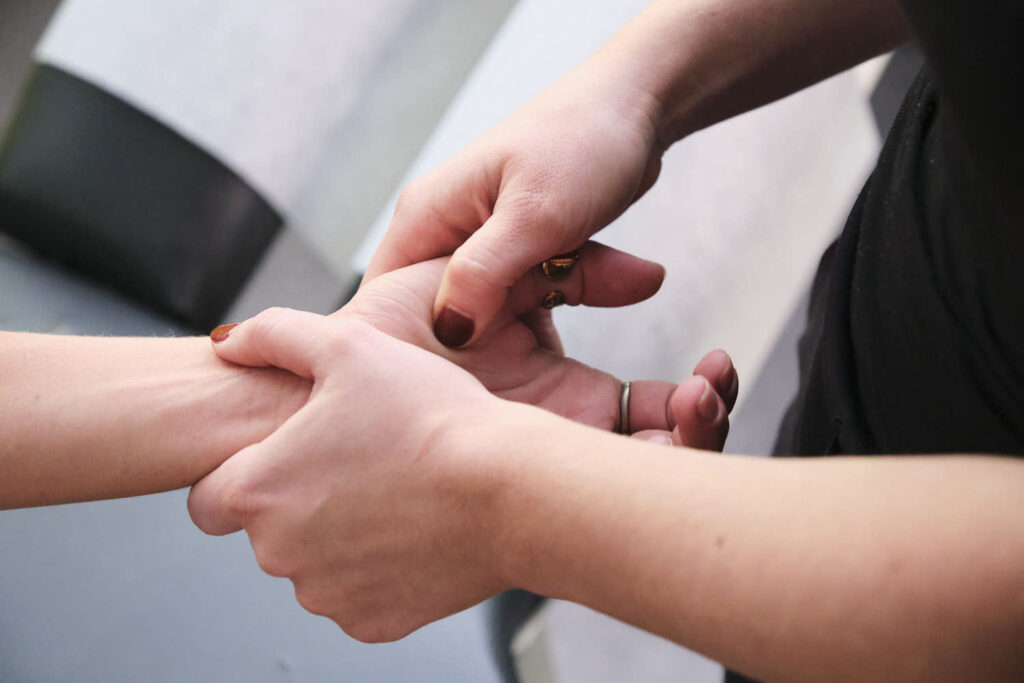
Wrist and hand pain from overuse and carpal-tunnel-type symptoms involve many structures in a small area and may be related to tendons, joints, or nerve compression.(3) Our approach includes careful assessment of the wrist and hand, and treatment options such as joint mobilization, soft tissue work, and exercise. For many people searching for a chiropractor for carpal tunnel or a chiropractor for wrist pain, this combination may help reduce discomfort and improve function.
How long does it take to recover from a pinched nerve with chiropractic care?
Recovery time for a pinched nerve depends on the cause (disc, joint, or soft tissue), how long it has been present, and your sport or work demands. Some patients feel meaningful change within a few visits, while others need a longer plan focused on spinal decompression chiropractic care, soft tissue treatment, and progressive rehab. We will outline a realistic timeline after your initial evaluation.
When should an athlete see a chiropractor for nerve pain?
You should consider seeing us if you notice burning, tingling, numbness, or sharp shooting pain during or after activity; if symptoms are worsening; or if rest and simple self-care are not improving things. Early evaluation can be especially important when neck pain, shoulder pain, or wrist and hand issues are combined with changes in strength or coordination, since these can be part of more complex musculoskeletal injuries and nerve problems.(1,3)
Find Support for Nerve Pain From a Sports-Related Injury
If you are dealing with nerve pain from sports injuries and want a comprehensive, movement-focused plan, our team at Tangelo Health in Seattle is here to help. Book an Appointment.
References
- Russin NH, et al. Upper Crossed Syndrome in the Workplace: A Narrative Review with Clinical Recommendations for Non-Pharmacologic Management. Int J Environ Res Public Health. 2026. doi:10.3390/ijerph23010120
- Tabasum H, et al. Wearable microfluidic-based e-skin sweat sensors. RSC Adv. 2022. doi:10.1039/d1ra07888g
- Mezian K, et al. Ultrasound Imaging and Guidance in Common Wrist/Hand Pathologies. Am J Phys Med Rehabil. 2021. doi:10.1097/PHM.0000000000001683