
Chronic lower back pain can affect much more than your back. It can make sitting at work uncomfortable, disrupt your sleep, limit exercise, and make everyday movements feel harder than they used to. If your back pain has been sticking around for months, Dr. Mike Smith at Tangelo Health’s West Seattle clinic takes a personalized approach to helping you understand your symptoms and move more comfortably. Rather than focusing only on where it hurts, Dr. Smith looks at how your spine, hips, muscles, and movement patterns work together to develop a treatment plan around your needs.
What Is Chronic Lower Back Pain?
Lower back pain is generally considered chronic when it lasts for 12 weeks or longer [1]. There isn’t always one obvious reason for ongoing back pain. It can be influenced by a combination of factors, including movement habits, muscle tension, joint mobility, previous injuries, activity levels, stress, and sleep.
Some people may also have conditions such as a disc problem or sciatica contributing to their symptoms.
That’s why Dr. Smith starts with a thorough assessment rather than assuming every patient’s back pain needs the same treatment.
How Dr. Mike Smith Approaches Chronic Back Pain
As a Primary Spine Practitioner and Certified Chiropractic Sports Practitioner, Dr. Mike Smith follows a straightforward approach:
Understand your pain. Assess how you move. Build a plan that fits your goals.
1. He Starts by Listening to Your Story
Your first appointment begins with understanding what you’re experiencing.
Dr. Smith will ask about:
- When your back pain started
- What makes it better or worse
- How it affects your work, sleep, exercise, and daily activities
- Any previous injuries or treatments
- What you would like to get back to doing
This gives him a better understanding of your symptoms and what you want your treatment to accomplish.
2. He Looks at How You Move
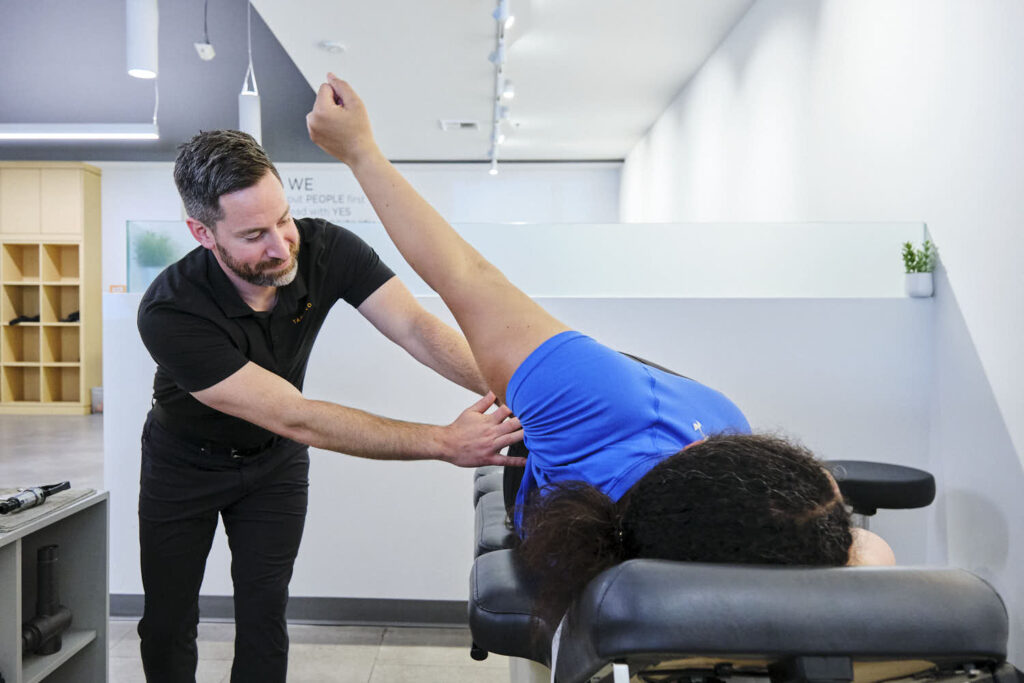
Next, Dr. Smith performs a hands-on assessment and may use the Selective Functional Movement Assessment (SFMA) to evaluate how your spine, hips, and other areas move together.
This can help identify movement limitations and areas that may be contributing to your symptoms. It can also help determine whether additional testing, imaging, or referral to another healthcare professional may be appropriate.
3. He Creates a Treatment Plan Around You
There isn’t one treatment that works for every person with chronic back pain. Dr. Smith may combine several approaches based on what he finds during your assessment.
Your plan may include:
- Chiropractic care to support joint mobility
- Active Release Technique or IASTM to address areas of soft tissue tension
- Guided movement rehabilitation to work on strength, mobility, and control
- Education around posture, lifting, movement, and everyday habits
The goal isn’t simply to treat your back during an appointment. It’s to give you tools you can use as you return to the activities that matter to you.
What Can You Do Between Appointments?
Managing chronic back pain often involves more than in-clinic treatment.
Depending on your needs, Dr. Smith may recommend a home exercise program, movement breaks throughout the day, or strategies for gradually returning to activities you have been avoiding.
He can also help you understand how to modify your activity during a flare-up without stopping movement completely.
Your plan can be adjusted as your symptoms and abilities change.
How Long Does Chronic Back Pain Treatment Take?
There is no single timeline for chronic back pain. How quickly you improve can depend on how long you’ve had symptoms, what factors are contributing to them, and what you need to get back to doing.
Dr. Smith monitors your progress throughout care and can adjust your treatment plan as you move forward.
If your back pain is accompanied by significant weakness, numbness, changes in bowel or bladder function, fever, or follows a serious injury, seek medical attention promptly [3].
Frequently Asked Questions
Can a chiropractor help with chronic lower back pain?
A chiropractor can assess your symptoms and movement and develop a treatment plan based on your individual needs. At Tangelo Health, Dr. Smith may combine chiropractic care, soft tissue techniques, and functional rehabilitation as part of your care.
What is the best treatment for chronic lower back pain?
There isn’t one treatment that is right for everyone. The World Health Organization recommends approaches such as education, exercise programs, and spinal manipulative therapy for chronic primary low back pain [2]. Dr. Smith uses your assessment, symptoms, and goals to determine what approaches may be appropriate for you.
Can a pinched nerve cause chronic back pain?
Nerve irritation can sometimes cause back pain that travels into the buttock or leg. If you’re experiencing these symptoms, Dr. Smith can assess your movement and symptoms to help determine what may be contributing to them. Learn more about pinched nerves and how they’re treated.
Should I rest or stay active with chronic back pain?
For many people, staying active is an important part of managing ongoing back pain. The right type and amount of movement depends on your symptoms and abilities. Dr. Smith can help you find exercises and activities that are appropriate for your situation.
Ready to Take the Next Step?
Living with back pain for months can make you feel like you’ve had to adjust your life around your symptoms. Dr. Mike Smith takes the time to understand what’s going on, assess how you’re moving, and build a treatment plan around your goals.
References
- World Health Organization. (2023, June 19). Low back pain [Fact sheet]. World Health Organization.
- World Health Organization. (2023, December 7). WHO releases guidelines on chronic low back pain. World Health Organization.
- Mayo Clinic Staff. (n.d.). Back pain: Symptoms and causes. Mayo Clinic.

Dr. Mike Smith, Chiropractor (DC, CCSP®, PSP)
Dr. Smith is a sports chiropractor and Director of Practice Operations at Tangelo who specializes in diagnosing and treating acute and chronic muscle, bone, and joint pain, including back pain, disc injuries, sciatica, and whiplash.