Headaches can be incredibly disruptive. Especially if you are trying to balance work, training, family, and an active Seattle lifestyle. If you find yourself reaching for pain medication regularly, you may be wondering whether a chiropractor for headaches could be a more natural way to find relief.
At Tangelo Health in Seattle, we work with many patients who are looking for tension headache treatment, cervicogenic headache treatment, and support for neck pain and headaches. Our goal is to help you understand what may be driving your symptoms and how chiropractic and functional rehabilitation may fit into your overall plan for headache relief.
What Types of Headaches Can Chiropractic Care Help With?
Headaches can come from many different sources. Some are more likely to respond to manual, movement-based care than others.
- Tension-type headaches are often described as a tight band or pressure around the head and are commonly linked to muscle tension and stress.1
- Cervicogenic headaches start in the neck and are thought to be referred pain from joints, muscles, or other structures in the neck region.1,2
- Headaches related to musculoskeletal dysfunction may be influenced by posture, restricted joints, or tight soft tissues in the neck, upper back, and shoulders.3
Guidelines for chiropractors suggest that spinal manipulation may be appropriate as part of care for adults with cervicogenic and tension-type headaches, often within a broader, multimodal plan.1 Manual therapies and exercises may offer short-term reductions in headache intensity for some people with cervicogenic headaches, although longer-term effects are less clear.2
Because each person’s situation is different, our team focuses on understanding whether your specific headache pattern looks musculoskeletal in nature, or whether you may need evaluation with another type of headache specialist in Seattle, such as a neurologist or your primary care provider.
How Neck, Posture, and Movement Can Influence Headaches
For many Seattle patients, long hours at a computer, driving, or training without enough recovery can create tension and stiffness through the neck, shoulders, and upper back. This may contribute to cervicogenic headaches and tension-type headaches in some people.1,2
When the joints in your neck are not moving well or the surrounding muscles are overworked, signals from those structures may be interpreted by the brain as headache pain. This is one reason neck pain and headaches often show up together.
By improving how your neck and upper back move, we aim to reduce that musculoskeletal irritation and help ease strain on sensitive tissues that may be contributing to your symptoms.
What We Do at Tangelo Health for Headaches
At our clinic, chiropractic for tension headaches and cervicogenic headaches usually starts with a detailed assessment. We ask about your headache pattern, triggers, work and training load, and any red-flag symptoms that might mean you need imaging or referral.1
When your headaches appear to be musculoskeletal, our care plan may include:
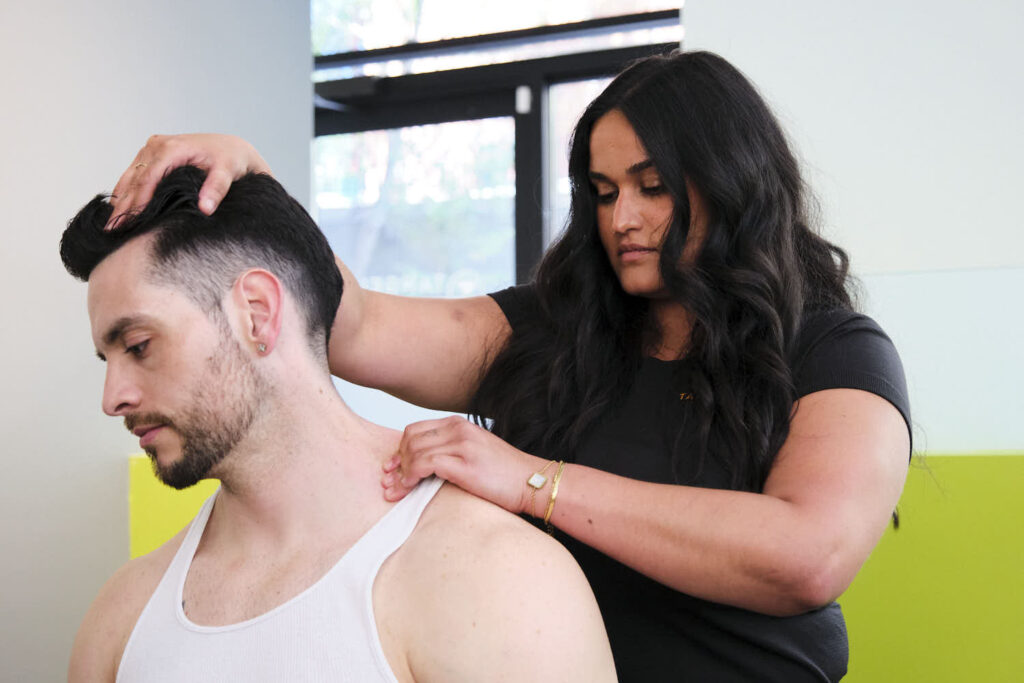
- Chiropractic adjustments to the neck and upper back to help restore joint motion and reduce local irritation. Spinal manipulation is recommended in chiropractic guidelines for cervicogenic headache and as part of multimodal care for tension-type headaches.1 Learn more about our approach to chiropractic adjustments.
- Manual therapy and soft-tissue work, such as targeted myofascial techniques or tools similar in principle to the methods used in the Graston Technique or Active Release Techniques, to address tight or overworked muscles linked to your headache pattern.
- Functional rehabilitation exercises to strengthen key stabilizers, improve posture tolerance, and retrain movement patterns that may be feeding your headaches.1,2 You can read more about our functional rehabilitation therapy programs.
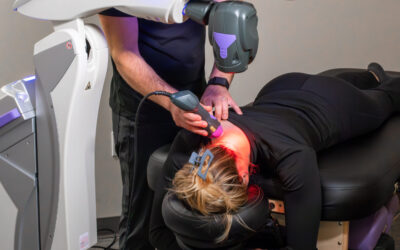
- Adjunctive therapies such as cupping or MLS laser therapy, which may help with muscle tension or local discomfort as part of a broader plan.
Research on manual therapy fields suggests that combining joint and soft-tissue techniques can be associated with reductions in headache frequency and severity of the headache. These approaches can help improve in quality of life, for those experiencing headaches linked to musculoskeletal dysfunction.3 We design your plan around similar principles, while tailoring it to your goals. Whether that is getting through a workday with fewer headaches or returning to higher-level training without constant flare-ups.
What Results Can Seattle Patients Expect?
Headache relief is rarely “one size fits all,” and we never promise that chiropractic care will cure headaches. However, many patients do report meaningful changes when their headaches have a clear neck or movement component.
- Manual therapy for cervicogenic headache may offer short-term decreases in headache intensity for some adults.2
- Chiropractic guidelines support spinal manipulation as a reasonable option for cervicogenic headache and within multimodal care for tension-type headache.1
- Combined manual techniques used in other hands-on disciplines have been associated with reduced headache severity and frequency and better quality of life in headaches linked to musculoskeletal dysfunction.3
In real-world practice, we often pair spinal adjustments with progressive rehab, mobility work, and lifestyle coaching. This type of approach may help you not only calm current symptoms but also build resilience so that long days at the office, long runs around Green Lake, or time on the bike path feel more manageable.
Because our patients are typically active adults and athletes, we also pay close attention to how your headaches respond to training volume, sleep, recovery, and stress, and we adjust your plan accordingly.
Is Chiropractic Safe for Headaches and Migraines?
Safety is always our first priority. The available evidence on manual therapies for headaches associated with musculoskeletal dysfunction has not shown significant harm signals in the studies reviewed, although the quality of evidence is limited and not all potential risks are captured.3
At Tangelo Health, we:
- Screen carefully for red flags that may point to non-musculoskeletal causes and coordinate referral when needed.1
- Adapt techniques to your comfort level, using gentle mobilizations or soft-tissue work when high-velocity adjustments are not appropriate.
- Encourage open communication so you can let us know how you feel during and after sessions.
For migraine and chiropractic care, we are especially conservative. Migraines can have complex neurological drivers. In some cases, there may be a neck or muscle-tension component that responds to the care we offer. In others, a neurologist for headaches may be the better primary provider, with Tangelo playing a supportive role in managing neck pain and posture-related triggers.
How Many Chiropractic Sessions for Headache Relief?
The number of visits needed varies. Research on nonsurgical interventions for cervicogenic headaches shows that benefits from manual therapy have been most noticeable in the short term (0–2 weeks), with longer-term outcomes less certain.2
In our Seattle clinics, we typically recommend a short initial trial of care and then re-evaluate. Many patients start to notice changes in headache intensity, frequency, or duration within the first several visits. From there, we may adjust frequency, transition you toward more self-management with exercises, or coordinate with your other providers.
Our aim is always to help you build lasting skills through mobility work, strengthening, and postural strategies, so that you rely less on passive care over time.

When to Choose a Chiropractor vs Neurologist for Headaches
It can be confusing to decide whether to see a West Seattle chiropractor for headaches, a Green Lake chiropractic headache treatment provider, or a neurologist. As a general guide:
- Chiropractic care may be a good starting point if your headaches are linked with neck pain, stiffness, posture, or specific movements, and if they feel like tension-type or cervicogenic headaches.
- A neurologist or medical provider is important if you have sudden, severe “worst-ever” headaches, changes in vision or speech, weakness, confusion, a history of serious head injury, or headaches that are steadily worsening despite care.
We frequently collaborate with other healthcare professionals in Seattle. If your presentation suggests you need imaging, medication management, or specialized testing, we will discuss that with you and help you take the next steps.
FAQ: Chiropractic and Headache Relief in Seattle
Can chiropractic care cure headaches?
No single approach can guarantee a cure for headaches. Chiropractic adjustment for headaches may help reduce pain and improve function for some people, especially when headaches are linked to the neck or musculoskeletal issues, but we always frame it as one potential part of a broader plan rather than a cure.1–3
What causes tension headaches?
Tension headaches are often connected with muscle tension, stress, and mechanical factors like prolonged sitting or static posture.1 In many of our Seattle patients, long workdays and training loads seem to play a role. Our focus is on addressing those mechanical and lifestyle contributors while coordinating with your other providers as needed.
Is chiropractic safe for migraines?
For migraines, we move carefully and keep your medical team involved. Manual therapies for musculoskeletal headaches have not shown significant harm in the studies reviewed, but the evidence is limited and does not focus specifically on migraines.3 We typically emphasize gentle techniques and rehab, and we refer or co-manage when neurological features are prominent.
Do you treat neck pain and headaches together?
Yes. Because neck pain and headaches often overlap, we commonly create integrated plans that address both. That might include neck pain treatment, targeted soft-tissue work, and exercises designed to support more comfortable posture and movement.
How is Tangelo Health different from a typical headache clinic?
We focus on movement, mechanics, and active care. Instead of only chasing symptoms, we look at how your spine, shoulders, and overall movement patterns may be contributing to your headaches. Our combination of chiropractic care, manual therapy, and functional rehabilitation is designed to support natural headache relief Seattle patients can integrate with their medical care.
Dealing With Recurring Headaches and Want To Explore Ways To Help?
Our Seattle team is here to help evaluate whether your symptoms look musculoskeletal and design a plan around your goals. Book an Appointment
References
- Trager RJ, et al. Chiropractic Management of Adults with Cervicogenic or Tension-Type Headaches: Development of a Clinical Practice Guideline. J Integr Complement Med. 2026. doi:10.1177/27683605251397769
- Martins L, et al. Efficacy of nonsurgical interventions for the management of adults with cervicogenic headache: a systematic review and meta-analyses. Ann Phys Rehabil Med. 2026. doi:10.1016/j.rehab.2025.102070
- Rehman Y, et al. Osteopathic manipulative treatment in the management of headaches associated with musculoskeletal dysfunction: systematic review and meta-analysis. J Osteopath Med. 2026. doi:10.1515/jom-2025-0075