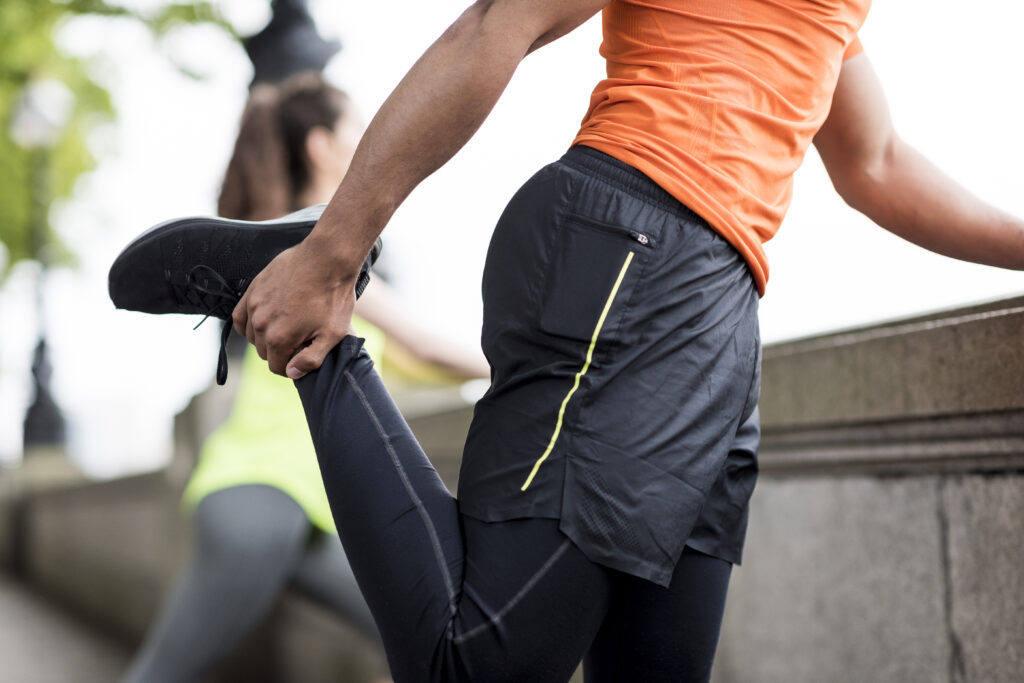
If you have painful tightness in the back of your thigh after a sprint, lift, or sudden movement, you might be dealing with a hamstring strain. It can be frustrating, especially if you are used to staying active and now find yourself asking how to heal a hamstring strain fast or how to sleep with a pulled hamstring without throbbing pain waking you up.
At Tangelo Health in Seattle, we work with active adults, runners, weekend warriors, and competitive athletes every day who want to get back to what they love as safely and efficiently as possible. In this guide, we will walk through what helps a hamstring strain heal faster, what realistic hamstring strain recovery looks like, and how our combination of chiropractic care and functional rehabilitation may support your healing.
What Is a Hamstring Strain?
Your hamstrings are the group of muscles along the back of your thigh that help you bend your knee and extend your hip when you walk, run, or jump. A hamstring strain—often called a pulled hamstring—happens when these muscle fibers are overstretched or partially torn. The injury might happen during a sprint, explosive movement, or a quick change of direction, but it can also show up gradually if you’re dealing with underlying issues like hip, knee, or low back pain.
Hamstring strain grading is usually based on severity:
- Mild (Grade I): Small number of fibers affected, mild pain, usually able to walk.
- Moderate (Grade II): More fibers involved, bruising or swelling, painful walking and bending the knee.
- Severe (Grade III): Near-complete or complete tear; walking is very difficult and the muscle may feel “gone” or very weak.
The more severe the strain, the longer hamstring strain recovery is likely to take. While many people hope to learn how to heal a pulled hamstring in 2 days, true healing usually needs more time—and the right plan—to restore strength and reduce the risk of re-injury.
What Helps a Hamstring Strain Heal Faster?
There is no single magic trick that instantly fixes a muscle strain, but several strategies may help your hamstring strain heal as efficiently as possible:
- Early protection and gentle movement: In the first few days, it often helps to avoid activities that spike pain, while still keeping the leg moving with light, pain-free motions.
- Progressive strengthening: Gradually loading the hamstrings with the right exercises can support tissue repair and improve resilience.
- Good adherence to your program: Sticking with your rehab plan consistently appears to be a major factor in preventing future hamstring injuries in active people.1
Exercise-based programs aimed at the hamstrings are associated with a lower risk of future hamstring strains in athletes, especially when people regularly follow the sessions instead of skipping them.1 This is one reason we tailor our functional rehabilitation plans around your schedule and build habits that are realistic for busy professionals, parents, and athletes.
The Role of Strengthening in Hamstring Rehabilitation
A big piece of hamstring rehabilitation is rebuilding strength, especially in the lengthened (stretched) position where many hamstring injuries occur. One well-known exercise for this is the Nordic hamstring exercise, where you slowly lower your body while your ankles are held in place. Training programs that include this type of focused hamstring work are linked with meaningful gains in hamstring strength across both athletes and nonathletes.3
Strengthening that targets the hamstrings in a controlled way appears to improve the muscle’s ability to handle load, which may support your return to running, lifting, or sport with more confidence.3 The encouraging news is that these strength benefits generally do not require extremely high weekly volumes; moderate, consistent training spread across the week may still lead to important improvements.3
At our clinic, we commonly blend bodyweight exercises, resistance bands, and gym-based movements into your program so you are not only rehabbing the injury but also addressing the strength and control needed to reduce the chance of another strain.
How We Approach Hamstring Injury Treatment in Seattle
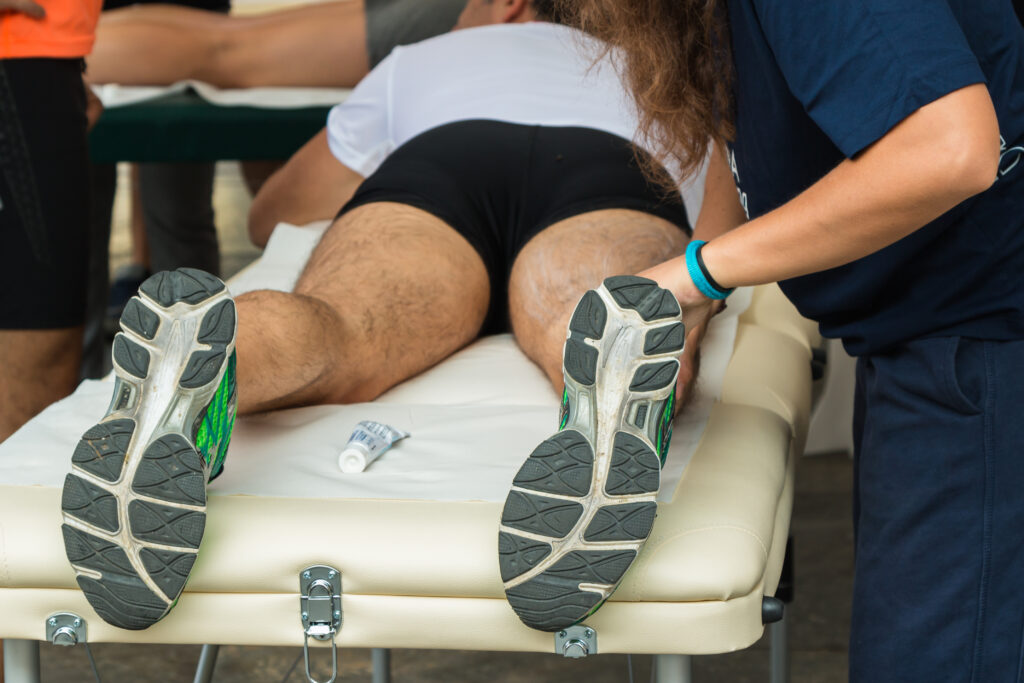
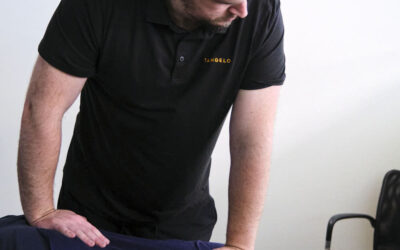
When you visit Tangelo Health for hamstring injury treatment in Seattle, we start with a detailed movement and hands-on assessment. We look at your hip, knee, and spine, your running or lifting pattern (when relevant), and your daily demands at work and in sport. Then we design a personalized plan that may include:
- Chiropractic adjustments to help improve joint motion through the spine, pelvis, and hips, which may reduce extra strain on the hamstrings.
- Active Release Techniques and other soft tissue therapy to gently address tight or irritated muscle and fascia in the hamstrings and surrounding areas.
- Graston Technique and cupping therapy in select cases to support local circulation and tissue mobility.
- Progressive functional rehabilitation therapy to rebuild strength, control, and power in movements that look like your real sport or daily life.
- MLS laser therapy or kinesiology taping when appropriate, to support comfort and activity tolerance.
Because many of our patients are also dealing with issues like hip pain, knee pain, or sciatica-type symptoms, we do not just focus on the hamstring muscle alone. We look at how your whole body moves so that your plan addresses both the injury and the underlying movement patterns contributing to it.
Can Anything Speed Up Return to Sport?
Active adults and athletes are often eager to know how long a pulled hamstring takes to heal and whether anything can speed up the timeline. Recovery time can vary widely depending on the grade of the strain, your health, your sport, and how consistent you are with treatment and rehab.
Some people explore options like platelet-rich plasma (PRP) injections. In studies of athletes with acute hamstring injuries, PRP has been associated with a shorter time to return to play—on the order of about a week faster on average—compared with usual care, although the overall evidence is still considered low to moderate in certainty and results vary.2 Reinjury and adverse event rates have appeared similar between those who receive PRP and those who do not.2
At Tangelo Health, we do not provide injections, but if PRP or other medical options are appropriate for you, we coordinate with your broader care team while we focus on your movement, strength, and function. Your Tangelo doctor may discuss non invasive therapies like Class 4 Laser which accelerates recovery and reduces pain in proximal hamstring tendonopathy.4
How to Sleep with a Pulled Hamstring
Pain at night can be one of the most frustrating parts of a hamstring injury. Many people specifically search for how to sleep with a hamstring injury or the best sleeping position for hamstring pain because lying down can cause the muscle to stiffen or throb.
A few general ideas that often help our patients include:
- Experimenting with side-lying and back-lying positions to find which is most comfortable.
- Using pillows under or between your knees to gently support the leg.
- Doing a short, gentle mobility routine in the evening as recommended in your rehab plan.
If your pain keeps you from sleeping, we can help you modify your routine and positions, and adjust your rehab program so you are not aggravating the injury right before bed.
Hamstring Injury Prevention and Long-Term Resilience
Once your pain has calmed down and you are moving better, our goal is to help you feel confident returning to running, lifting, or sport—and staying there. Exercise-based programs that strengthen the hamstrings are associated with a reduced risk of future hamstring strains in football players, especially when people complete a high percentage of the sessions rather than skipping them.1 In other words, consistent follow-through on your plan seems to matter as much as the specific exercises you choose.1
Nordic-style hamstring training and other targeted strengthening are also linked to solid improvements in hamstring strength across many different training programs, suggesting you may not need extreme training volumes to see benefits if you stay consistent.3 Our team builds these principles into your program so hamstring work fits naturally into your existing training, whether you are a runner around Green Lake, a recreational soccer player, or someone simply wanting fewer flare-ups when you sit or stand all day.
FAQ: Hamstring Strains and Recovery
How long does a pulled hamstring take to heal?
Mild strains may feel significantly better within a couple of weeks, while more moderate or severe injuries often take longer. The key is not just feeling better but also restoring strength, flexibility, and control so you can return to activity safely. We guide you through objective progress markers so you are not guessing when it is safe to push harder.
Can I really heal a pulled hamstring in 2 days?
Most true hamstring strains need more than a couple of days to recover. You may be able to calm irritation and move better within a short time, but tissue healing and rebuilding strength typically require a longer, phased approach. Rushing often increases the risk of a setback.
What is the best sleeping position for hamstring pain?
There is no single best position for everyone, but many people do better on their back with a pillow under the knees, or on their side with a pillow between the knees so the leg is supported. We can help you experiment and adjust based on your exact symptoms and whether your hamstring pain is combined with hip, knee, or back discomfort.
Do I need imaging for a hamstring strain?
Many hamstring strains can be assessed and managed based on your history and a physical exam. Imaging is sometimes considered for more severe injuries, high-level athletes, or when symptoms are not following a typical healing pattern. If we feel imaging or referral is appropriate, we discuss that with you and coordinate your care.
How can a sports chiropractor in Seattle help with my hamstring?
As a sports injury clinic in Seattle, we combine chiropractic care, manual soft-tissue techniques, and individualized functional rehabilitation to address both your symptoms and the way you move. Our goal is to help you understand how to heal a pulled hamstring in a realistic, structured way and to support you through each phase of recovery so you can get back to the activities you enjoy.
Find support for sore hamstrings at Tangelo Health
If you are dealing with a hamstring strain and want a clear plan to move forward, you can Book an Appointment with our team at Tangelo Health in Seattle.
References
- Gu J, et al. Intervention components, training dose, and adherence in exercise-based prevention of hamstring strain injury in football: a systematic review and meta-analysis. Ann Med. 2026. doi:10.1080/07853890.2026.2652116
- Nakagawa H, et al. Effects of percutaneous platelet-rich plasma injection on return-to-play after acute hamstring muscle injury: a systematic review and meta-analysis. Br J Sports Med. 2026. doi:10.1136/bjsports-2025-110683
- Franke RA, Rodrigues R, Lopez P, Nakamura FY, Baroni BM. Dose-response relationship for strength gains from Nordic hamstring exercise: A systematic review, meta-analysis, and meta-regression. J Strength Cond Res. 2025. doi:10.1519/JSC.0000000000005184
- Verma S, Esht V, Chahal A, et al. Effectiveness of High Power Laser Therapy on Pain and Isokinetic Peak Torque in Athletes With Proximal Hamstring Tendinopathy: A Randomized Trial. BioMed Research International. 2022.